.png)
#009: Borrowed Dopamine- Siara Confronts Her Screen Time with Ben Krechevsky
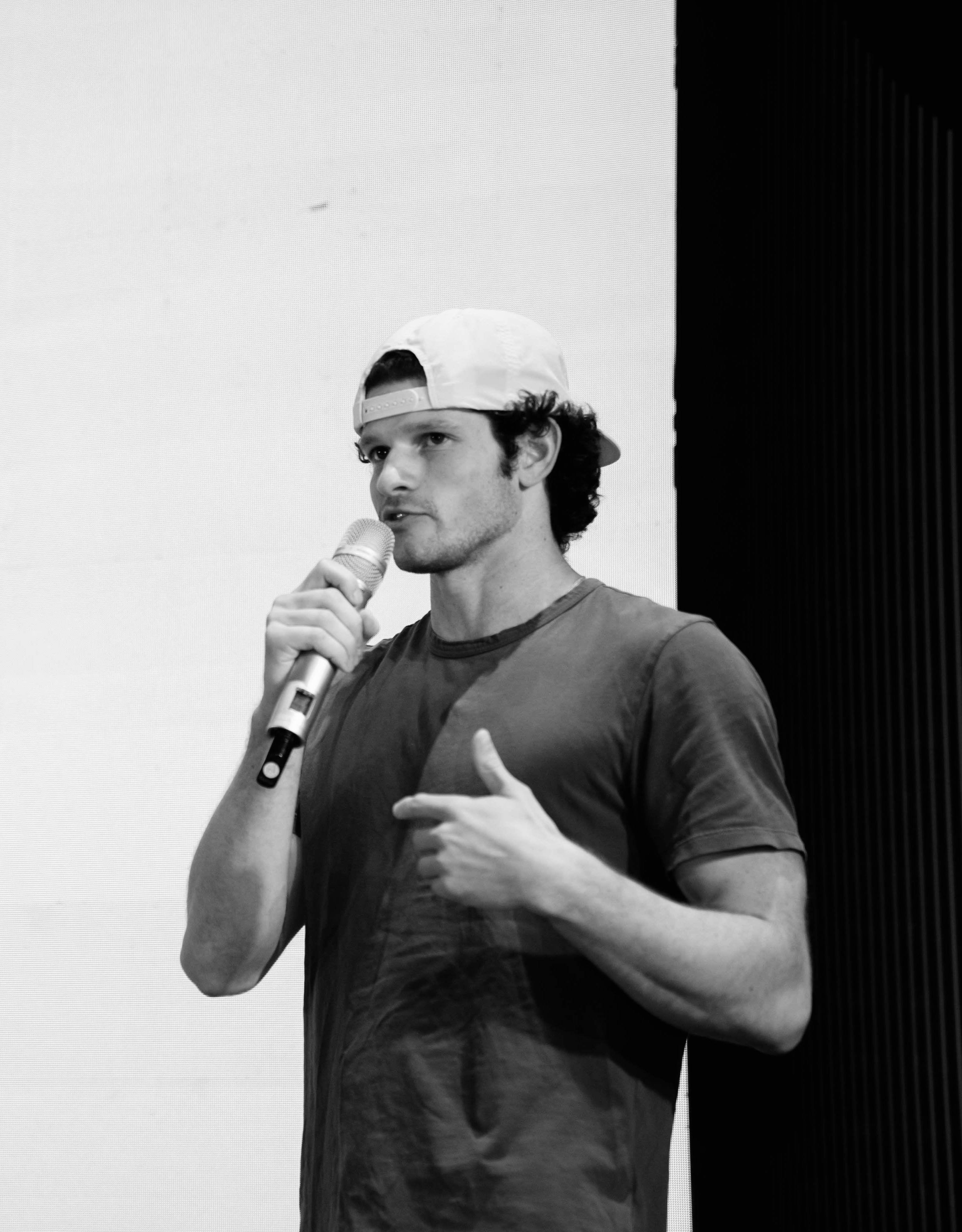
Ben Krechesky
Ben Krechevsky is a Certified Professional Life Coach and the Founder of Purpose Over Pixels, a structured coaching program that helps growth-oriented people reduce digital distraction and reclaim their attention, awareness and agency. A burgeoning voice in digital wellness, Ben helps individuals & groups transform and heal their relationship with their phones. He utilizes a holistic, human approach—including personalized structure, accountability, and environment design—to create lasting behavior change. In an impulsive world designed to distract us, he promotes intentional balance with technology, so we can thrive in our health, relationships, career, and spirituality. Ben believes our lives deserve our full attention (we only get one!) and values deep connection and experiences.
LISTEN ANYWHERE
What is your time actually worth? Ben Krechevsky, founder of Purpose Over Pixels, made Siara put a literal dollar amount to her screen time. In this episode we get into why willpower alone can't save you from your phone, the deeper emotional triggers hiding behind your scrolling, and the self-binding strategies that actually create change. They’ll also talk about productivity porn, surrogate experiences, and why your phone sitting on the table is quietly ruining your conversations. Ben shares insights on how modern technology hijacks our attention, the root causes of smartphone overuse, and practical strategies to regain control of our digital lives.
Siara Singleton (00:47)
Hello, hello. Welcome back to the Log Out Podcast.
I am traveling a bit right now, so sadly I am not in the studio with Nelson, but I have a great episode for you today. I have been super excited to release this one. but first, something that I wanted to ask you all is how much is your time worth? Like if you had to put a dollar amount to it, how much is your time worth? And over the course of your life, how much time will you spend looking at your screen if your habits never change? Or
If they get worse. How much value will you actually lose to your screen over the course of your life? My next guest made me sit down and look at these numbers critically. And my God, when I'm faced with these numbers, you can actually see the moment. It's around the 56 minute mark. You can actually see the shame and disappointment all over me. I did not like these numbers.
And I know you're like, we get it, Siara screentime bad. Time is wasted. Yada yada. And yeah, like I'm not gonna sit here with a guest and whine for 60 minutes about how bad screen time is for you without a solution. I would never do that to you. But that's kind of what everyone does, right? Like they shame you for your screen time, they call certain generations lazy and addicted.
They point the finger at you And they give you something new to feel bad about yourself for. And then next thing you know, you're doom scrolling about doom scrolling somehow. And it's just totally pointless. but no, we need solutions.
Did you know that there are wellness coaches specifically there to help you lower your screen time? Like actual experts dedicated to helping you improve your phone habits. If you didn't know that, that makes sense because there are not many, but I found one, and we are blessed with the ability to get inside the head of one of them today.
Today we'll talk to Ben Krechevsky Ben is a certified professional life coach and the founder of Purpose Over Pixels. He runs a structured coaching program that helps people reduce digital distraction and reclaim their attention, awareness, and agency. Ben believes our lives deserve our full attention so individuals and groups transform and heal their relationships with their phones.
We are not.
Getting on here for an hour to ultimately tell you to turn your phone to grayscale or delete social media for a week or anything like that. Ben is gonna give us actual tactics, the concrete things that you can do to help you understand why you're actually reaching for your phone. Because the truth is that's the only way you're gonna fix this. By understanding your own brain and triggers and motivations for doing so. There's no quick hacks and cheap tricks that are actually going to help you break a phone addiction. This is something that you have to actually want intrinsically and
Only exceptional people who are serious about this are really gonna fix the problem for themselves. That's the reality. It's not
reality that brands or thought leaders want to tell you, but it is the truth. we'll talk about something called a self-binding strategy, which is basically like rigging your environment so you're less likely to waste time on your phone. We'll also get into why just having more willpower is kind of a joke, because you're not fighting your own brain, you're fighting a few thousand engineers somewhere and a few trillion dollars somewhere else. Like it's not really a fair fight.
What I loved most about this episode is the familiarity and the humanness that Ben brought to this conversation.
I didn't feel like I was being yelled at about my phone I felt like I was being understood.
and I think that you're gonna feel that too. This conversation made me feel very hopeful that if we want to, we can actually mend our relationships with our phones. So you're gonna love it. And I promise you're gonna walk away with some really powerful action items. Let's meet Ben.
Siara Singleton (04:15)
Ben. Thank you for joining us today.
Ben Krechevsky (04:17)
Hey Siara thanks so much for
having me. Really excited to
get into the conversation today and
Siara Singleton (04:22)
Yeah.
Ben Krechevsky (04:23)
hopefully share some things that that will help your listeners who are feeling maybe stuck or frustrated with their own relationship with their phone.
Siara Singleton (04:28)
Yeah.
A hundred percent. Yeah, I've been really excited for this conversation. I think what you have to offer is exactly what my listeners are looking for, so let's just dive into it. So you help people reclaim their attention. This is such a gap in my opinion of all the skills that people are trying to build in the modern world. I think this is one of the most important. So I'm super curious how you got here. What's your origin story? Like how did you get into this space?
Ben Krechevsky (04:53)
Yeah, great question. maybe before we we jump into that, I'd love if we kind of like center ourselves and on the point of attention, kind of get into this space together. And so one thing I do with clients is start sessions with just a deep breath. It's called four, seven, eight breathing. So we'll take like a four second inhale together, we'll do a seven second hold and then eight second exhale kind of like through your mouth. so if you're if you wanna join, you can.
Siara Singleton (05:18)
Okay.
Yeah, let's do it. Is this an eyes closed breath? Is this like a
Ben Krechevsky (05:20)
But I'll start with that and that kinda helps get us present.
you can do either. I mean maybe I'll count on my fingers so that you can kinda do it with me, but if you wanna close your eyes that's that's cool too. All All right, here we go. Three, two, one.
Siara Singleton (05:30)
Okay.
No, I love it. Let's do it.
Ben Krechevsky (06:01)
How do you feel after having done that?
Siara Singleton (06:04)
Good. Great. I s I I did my morning meditation, but it was so long ago that that was a great reset. I appreciate that.
Ben Krechevsky (06:05)
Feeling relaxed.
Great. and then maybe one other thing before just diving into the origin story, like one thing that I think about a lot is what if this was our last conversation before we both were going to die? I know it's a little bit morbid to think about, but let's just imagine for a moment that like this is our last conversation before we leave Earth. Getting into that mindset,
Siara Singleton (06:34)
Hmm.
Ben Krechevsky (06:36)
How does that maybe change your approach to this conversation?
Siara Singleton (06:42)
It makes me wanna squeeze all the information out of you as I can. So I'm in I'm in a content creator mindset, but if I if I dig deeper, yeah, maybe just it makes me not wanna go too shallow in our
like let's really dive into it as philosophically deep as your brain goes and my brain goes, I definitely wanna go there. That's where it it takes me. How about you?
Ben Krechevsky (07:08)
Okay, great. Love that. yeah, I often find that people feel more present when they sort of run that thought experiment through the through their minds. And yeah, for me it brings a lot of depth and on the point of attention, like that's what I help people focus on and and reclaim. Like it makes you just naturally more present and attentive for a conversation like this. And one day we're all going to die, but
Siara Singleton (07:24)
Yeah.
Ben Krechevsky (07:31)
That's way off in the future for most of us. And so if we can kind of bring the natural urgency, sort of like manufacture it into the day-to-day, that actually is an easy hack to make us more present and more attentive. but to answer your question, thanks for running through those with me. I feel like the space chose me in a lot of ways. I feel really compelled to focus on this issue of
Siara Singleton (07:44)
I like that. Right.
Ben Krechevsky (07:56)
smartphone, addiction, overuse, whatever you want to call it. it's it's just where I'm at in my life right now. And I've always been someone who is very present. I'm someone who's been enamored with nature and the natural world. And I feel like I've had pivotal moments throughout my life, especially during my formative years of high school and college really oriented me towards this space. And then, you know, fast forward ten years from that, and
it's kind of come full circle. and just to touch on a few moments, one of the best two-week stretches of my high school experience was a two-week trip I did out west backpacking. and they actually took away our phones for those two weeks. So we were with a big group and we're just, you know, fishing and hiking and camping and totally disconnected, which I think led me down, a path
Siara Singleton (08:32)
I don't know.
Ben Krechevsky (08:43)
Chasing those experiences later on in my life. And then the other key moment was I wrote a paper in I was a leadership studies major at the University of Richmond. And for those who don't know what that is, it's it's basically just a mix of social sciences and humanities centered around studying leadership. So there's a lot of economics, psychology, social sciences. But I wrote a paper in our critical thinking class about social media and its impact on mental health.
this is back in twenty fifteen. And so I wrote ten pages on that topic and then it just kinda bubbled in my subconscious for the last decade and now fast forward to today it's really come to the forefront where I'm blending my, professional inclination towards coaching with some expertise that I've developed on social media, smartphone usage, and bringing those two together where now I'm yeah, really
Focus on helping people transform their relationship with their phone so that they can get back more attention, improve their connection with themselves and others, and honestly just feel like they're in control of that part of their life.
Siara Singleton (09:40)
Hm. Did you have much of a relationship with say, you know, most of us had phones in high school, I think we're a similar age, but did you have much of a relationship with say social media before that trip? Was that trip like a senior year situation or when when
Ben Krechevsky (09:55)
Yeah, I think I was a junior
in high school. I was a late adopter to the iPhone. Like I definitely remember my friends having an iPhone before me. so maybe thankful to my parents for holding off on a little bit. but yeah, I I was definitely using social media and my phone, my iPhone at that time that I did that trip. yeah. So that was that was very impactful, I would say, to sort of
Siara Singleton (10:04)
Mm-hmm.
Mm no.
Ben Krechevsky (10:18)
Give me a chance to step back and sort of see okay, what's life like without social media and my smartphone?
Siara Singleton (10:22)
Yeah.
Do you think that you had a problem with it prior to that trip and and writing that paper and all the things that brought you closer to this?
Ben Krechevsky (10:35)
I wouldn't say so. I feel like I I actually generally felt like I had a pretty healthy usage with technology and my smartphone throughout high school and a good chunk of college, particularly having written that paper. Like it just made me aware of so many of the psychological things that were going on in our minds as it relates to why social media was so like gripping for people. and I actually distinctly remember a line where I I
Siara Singleton (10:40)
Hmm.
Mm-hmm.
Ben Krechevsky (11:00)
called it an addiction. And this is back, you know, this is 11 years ago. and I know we're not there yet in the public discourse, but maybe we will be in the next, you know, three to five years. But yeah, I felt like my relationship was largely good with technology for you know my early twenties. And then maybe I would split it into a few phases where I started working a corporate job in San Francisco, very fast paced,
Siara Singleton (11:08)
Mm-hmm.
Ben Krechevsky (11:22)
Client-demanding work where you're on email all the time, you know, Slack, and your phone's a big tool. And so I felt like that was sort of the first moment where my usage really ratcheted up. and then COVID happened where we all went fully remote. I felt like there was another big jump there.
And then I I would say maybe the third phase was moving to Australia for a few years after my time in San Francisco. And
I was kind of dealing with the aftermath of a of a difficult
breakup and being in a new country with you know not a lot of friends. And so I feel like that was like when my relationship with my phone was at its worst. And that kind of led to the wake-up moment I had of okay, this doesn't feel good, this doesn't feel like me.
Siara Singleton (11:53)
Yeah.
Mm.
Ben Krechevsky (12:06)
I want to do something about it. And then that led me down you know, year and a half journey of trying to to get it back to a a healthy, healthy level.
Siara Singleton (12:11)
Okay.
Okay, so there it you were kind of in a better spot than probably most of your peers when you were younger and then adult hood work, breakup life occurred and you were like, Okay, I'm seeing how people fall into this phone addiction trap. And that leads me to my next question of would you call overuse of smartphones a true clinical addiction, you know, by the definition that most would use the word addiction. It's it feels controversial in a way.
just simply because no one really talks about it as a true addiction. I've never heard anyone say, I've been diagnosed with smartphone addiction but it seems like we're on the same page of we do kind of feel like it it does fit that. Is that is that true for you?
Ben Krechevsky (13:00)
Yeah, great question. I'll I'll come back to that in one moment. But just to circle back, like I do think we're around the same age. Like I'm 30, I think you're 29. and I feel I feel like our generation has some responsibility of like stewardship around technology because we were bridging that gap of like we grew up without a lot of this technology. And so we've seen the bright side of that space. We've also seen the bright side of technology, but
Siara Singleton (13:07)
Yeah, yeah.
Ben Krechevsky (13:25)
That balance I think is really unique and puts us in a position to move forward pretty intentionally about it. so I'm very grateful for when I was born because it allowed me to see both both sides of it. On the addiction point, so not labeled as an addiction.
I don't know if you saw some of the trials that wrapped up recently in Los Angeles, but they were against meta, Snapchat, TikTok, and it was all about
Are these apps using addictive systems and technologies for for kids? Like there's a lot of really sad examples of kids, whether it's self-harm or bullying or getting sold drug. Like there's just you know, a whole bunch of things that happen as a result of their usage of social media. and so the trials are about okay, were they using
Siara Singleton (13:55)
Mm-hmm.
Ben Krechevsky (14:09)
addictive methods. And the result was yes, they were. And so I think the uncomfortable question then becomes if kids were addicted, why are adults not addicted? so yeah, while while the public hasn't like come out right and labeled it, I do expect, I suspect maybe in the next three to five years, that will change. and I mean the the last thing I would share is a lot of the latest research
Points to the fact that the majority of at least folks in the US, I think it's around 60%, feel like they're addicted to their phone. So there's sort of like self-reporting that they feel addicted. And if that much of the population is coming out and saying, like, yeah, I'm addicted to my phone, like I think you know, you can kind of put two and two together. I don't know if you're familiar with Stephen Bartlett, Diary of the CEO and and his podcast, but
Siara Singleton (14:37)
No. Okay.
Exactly. So yeah.
No.
Ben Krechevsky (14:53)
I listen to it occasionally and I think he ran a study where he pulled his listeners on that question, and that was around like eighty or eighty-five percent of his listeners said that they felt addicted. So yeah, it's whether or not we've labeled it as such, I think there's a lot of parallels between the types of symptoms and behavior that we see across other addictions in in our world, whether that's alcohol or gambling or substance abuse.
Siara Singleton (15:15)
Mm-hmm.
Yeah. And I think it's worth mentioning that there's probably a good reason why it feels like it is something we talk about in the zeitgeist, right? Like we talk about smartphones, it's such problem. And I don't feel like there's enough of an emphasis on the actual solutions. and it does feel like maybe there's a good reason why that is so. And maybe there's a good reason why we don't talk about it being addiction, probably because
the media outlets and platforms that be, they have a very vested interest in having our attention. So it is not in their best interest to talk about this. And so I love to talk about it because I just think it really needs more volume. but yeah, so
Ben Krechevsky (15:55)
Yeah.
And what one quick thing on that point too is like I I know I shared a little bit about my own journey with like going from high screen time to low screen time. Like my at its height, I think I was around like five hours of screen time a day. which I've had some people tell me, like, like you weren't addicted. everyone's got different yeah, dependencies and what addiction to one person might look totally different to someone else. I never labeled myself as like
I'm an addict. and I think there's a whole lot of sort of power identity and what we like how we kind of talk and think about ourselves. And I don't necessarily feel like if we do think it's an addiction, it doesn't mean like someone has to like identify as an addict, because then I think they start to like pathologize that a little bit and
Siara Singleton (16:37)
Yeah.
Mm.
Ben Krechevsky (16:41)
Yeah, can
can kinda can can kinda lead you down a path of more negative self concept, when you don't necessarily need to.
Siara Singleton (16:47)
Yeah, that's super fair. And I think
in my my my personal think tank of thinking about this as an addiction, I compare it to other addictions. let's say like alcohol, where what I do know about, you know, AA is that you do have to
Dedicate your life to not ever using alcohol. And so the difference with a smartphone addiction is in what modern life is it possible for someone to not use a smartphone? Some, sure, but not all, not most, certainly not me, not with my career. And so I I think it's worth thinking about very differently. and it's not always gonna be a smartphone. we don't know what you know the future tech addictions will look like.
whether it's going to be attention or something else. And so yeah, I think I think it's makes a lot of sense to make that distinction of, calling yourself an addict versus calling yourself someone who's experiencing addictive tendencies. I love that.
Ben Krechevsky (17:42)
Yeah, and it's it's such
a important point too for ninety-nine point nine percent of us, it's not realistic to throw our phone into the woods and never use it again. but I think there's a lot of value in recognizing that modern life has been set up and engineered to take advantage of our impulses. And so with that in mind, if you do want
intentional balance, which is what I preach with with clients. Like you have to be very determined and dedicated and designed intentionally in order to prevent sort of leaning into those impulses all the time.
Siara Singleton (18:14)
Mm-hmm. something that I've appreciated about when you talk about this online is that you talk about the actual deeper root causes and to why someone might be going to the scroll, doom scrolling, what are they avoiding? So I'd love to hear you talk about what some of those deeper root causes could be. and what are maybe the root causes that you see the most often when you work with people. So maybe our audiences can compare themselves.
Ben Krechevsky (18:25)
Mm-hmm.
Yeah, I think this will be really helpful to talk about. I almost want to just talk about like what's what's the problem itself, which some of these deeper you know topics will we'll we'll touch on that. but before I sort of give my take, I'm curious since you've talked to a lot of experts in this this space, like what's your sort of like 30 second overview of the of the problem? Like how do you see it?
Siara Singleton (18:45)
All right.
of the problem. My okay, so I believe that very smart people did their job very well and they hacked the human brain the way that the human brain was meant to perform. And I believe, you know, when we'll get into root causes in a second, but whatever it is that's making someone avoid something in their life, or making someone chase something in their life, the companies
have figured out a way to give at least a false version of that to us in a temporary form. And so whether it's, hacking into the dopamine levels of our brain or it's really understanding at a deep level what interests us and gets our attention, whether it's negative or positive, I think that, maybe a social media platform or a specific creator or
an app creator has just hacked that and it's just testing it's just trying different things seeing exactly what works and then running with that for example if we are talking about scrolling specifically people have figured out that rage bait works right so they'll really dive into that someone who might have certain values that they care deeply about will see something and it works on them where it just sort of gets them into this cycle
that is tapping into something that is natural and human and normal. It's not so much that there's something wrong with us. It's it's that we are our brains are working the exact way that they were meant to be and they figured that out. So that's what I think the problem is. hopefully that answers your question. Where where are you there?
Ben Krechevsky (20:37)
Very aligned on that front. the way I would phrase it is like we're the way human evolution and our brains have developed, it's like we're we're almost predisposed to using our phones a lot, just in the way that our minds are constructed. but then you have actors in society that have intentionally taken advantage of that. and so I think there's a really interesting point around this, which I I've written about, but it's it's almost like
We have to in a sense fight ourselves, fight our own hardwiring. That is just inherent in how humans have developed in order to save ourselves from these tendencies. but to answer your question on what are some of the deeper things here? because it's it's not just screen time. in my view, screen time is a symptom of what someone is actually going through in that in that moment. And so the phone is almost
The delivery system of a deeper addiction or deeper sort of behavior. And those might be a range of things depending on the person. it might be distraction from yourself, and your own self-concept and your identity. You might be escaping discomfort. And that could be in the form of, okay, I've got an hour to kill and I don't want to be bored. So
Rather than sit with my thoughts and be bored, I'm gonna go to my phone. maybe there's, you know, stress or anxiety going on in your life and you've got a big project at work coming up and you you're not really sure how to get started, and there's a lot of uncertainty around the project, and it's all of those different emotions are very uncomfortable to work through and and sit with. And so it's kind of a this escape valve for people. and I think the challenge is it's it's in our pocket or in our hand twenty four seven. So to say no to that escape valve.
Siara Singleton (22:01)
Yeah.
Ben Krechevsky (22:14)
all day long is is really difficult. so yeah, there's a whole bunch of stuff under the hood that I don't think gets talked about enough, but there's there's really some deep, deep things happening.
Siara Singleton (22:23)
Yeah. I'm curious what your advice would be for someone who is actually trying to determine what their triggers are. For me, I I didn't like have any system, but I was trying out different things. So I would have you know, I've tried very and I want to talk about this later, but I've tried various apps to help at least create some some friction before I might enter into an app that is destined to waste my time. And in that friction
Ben Krechevsky (22:31)
Mm.
Siara Singleton (22:51)
whether it be 30 seconds that it makes me wait before entering the app or something like that, I tried to really think about like, okay, why am I here? What caused me to go to this app? What am I actually feeling in this moment? and then once I'm in the app, some some more digging, how am I feeling right now? What am I chasing? what am I looking for? Cause sometimes I'll be in an app and I'm like, what am looking for? Like why am I so here? And it's so interesting to me. So I'm curious if you have some sort of framework because
Like I'll just share for me something that I noticed is like when I was going to Instagram, it was an avoidant of answering texts that I was like, I I'm not ready to answer this text, I don't know what to say. And I would go because I'm now on my phone, I'm now on Instagram because I was supposed to answer someone's text, which is feels backwards to me. So yeah, I'm just curious if you have any advice of how people can really identify what gets them there.
Ben Krechevsky (23:47)
Definitely not alone on the texting thing. I hear that all the time from clients I work with, like delaying responding to something, whether it's text or an email. I'm I'm curious, what else came up for you when you kind of did that self digging? Which I love that you did.
Siara Singleton (24:03)
Yeah, so many micro ones. I would say the most common ones might be if I'm let's say I I'm looking for something more like an activity. Like there's a there's like a brain game thing that I I like playing that is actually one of my more healthy phone habits. I will do that when I'm like on public transportation.
I did not grow up doing much public transportation. So I'm still like when I'm on the New York subway or sometimes when I'm on the train, I'm looking for a distraction because for some reason my you know, just sitting and people watching or looking out the window, I don't have the best ability to just sit and do that without looking at my phone. So it kind of a boredom thing, but also sort of a like I'm in public transportation, it's not the most comfortable environment for me.
There's this weird sort of social feeling I get when I'm on public transit that I noticed I was looking for a distraction. So that's that's another big one for me.
Ben Krechevsky (25:03)
And just jumping back to the text one, if you'll indulge me for a moment, like why did it feel so hard to respond to XYZ text? And so you sort of like put that off.
Siara Singleton (25:06)
Yeah.
sometimes it's just like someone is asking me a very logical question like can you do this date? can on this date can you do th this event? And I'm like, I've gotta answer four other questions before I can even answer this question. So now I'm overwhelmed and now I don't wanna do any of it. Or well maybe someone even asks you a difficult question in terms of,
Ben Krechevsky (25:28)
Mm-hmm.
Siara Singleton (25:35)
How are you doing? And it's someone closer to you, and you want to be really honest, but you're like, I'm not ready to actually answer that at a deep level right now. Even if it's just like a this day was just an annoying day, and you know, so I think it's like I want to be authentic with the people I'm communicating with. I want to be effective, I want to answer questions in
a in a good way. I also want to be a r a receptive person and a good listener. And if I read a text where I'm like
this person needs me right now in in an emotional way. Sometimes I'm like, okay, do I have the capacity right now to answer this in the way that they deserve? So it's really mostly out of respect for the people I'm communicating with, but it has an opposite reaction they might get a a more delayed response. And pretty much everyone in my life will tell you this. this is no secret. So that's that's what it's like for me. Have you heard similar from from other folks who struggle with that?
Ben Krechevsky (26:27)
A hundred percent. And I think a lot of the times it's it's almost like this you said overwhelm, but it's like this fatigue of making decisions, of responsiveness, of a whole bunch of stuff. and I think I mean, we'll talk about that maybe with the root causes piece, but the whole responsiveness culture that we've created ourselves is is a big reason why it's difficult to change this. But yeah, I think that there's a great quote that maybe you'll
Siara Singleton (26:49)
Mm-hmm.
Ben Krechevsky (26:52)
resonate with that's like what you what you avoid grows and what you face shrinks. And in my own personal experience when I've felt like, I can't respond to this text right now, it's almost the anxiety or the the knowledge of that in the back of my mind will grow with each day that I don't respond. And it's I would been so much better off just facing it in the moment. and really shrinking that.
Siara Singleton (27:10)
Yep.
Ben Krechevsky (27:13)
But sometimes it's hard because we don't have yet the mental capacity. And so I think a big part of the work that I do with people obviously helps them get their time back, but people feel they're able to then go out and handle those things in a lot more effective and practical, logical manner. which then frees up a whole bunch of energy and attention.
Siara Singleton (27:26)
Very much.
Yeah.
Mm-hmm.
Well, while we're on this topic actually, because I do feel a lot of people struggle with this, I always have wondered if there was a better system in terms of boundaries and expectations that you set with people and how you communicate with them, if that would really help the issue. Because once upon a time people were sending letters where they might say, It's Sunday, this is my designated reply to letters from faraway lands day. And you did have the time to like sit and answer
more thoughtfully. even a phone call. People would schedule, a phone call. Well now it's instant. It's like, I just sent you this DM on Instagram, I just sent you this text. I just sent you this email. So I think rapidly over time for humans the response time expectation has shrunk. And that maybe isn't natural for a human. So I would love your thoughts on that. And then I would love your thoughts on if you've
noticed that's setting certain boundaries and expectations like, you know, I'm not gonna answer in the middle of a workday or even weekdays, it's gonna be tough for me to to really respond meaningfully, but weekends is a great time to reach me. I've asked a few guests this and so I'm curious, one, what you've noticed works for people and then two, maybe for yourself, what works for yourself.
Ben Krechevsky (28:48)
Yeah, love this question. I'm just jotting some things down on the side. But well let me start with this. Like, have you do you do writing as like a content creator or like do you write in your day to day at all?
Siara Singleton (29:02)
yeah, constantly.
Ben Krechevsky (29:03)
Would you agree that writing and developing that muscle, that's a hard muscle to get, good at if you haven't been doing that, you know, your your whole life?
Siara Singleton (29:10)
Totally. Totally.
Ben Krechevsky (29:12)
And so I think this this point gets overlooked so often, but we just sort of found our way into this like email first, text first, Slack first environment. And most of us, myself included, are not phenomenal world-class writers. And you lose so much over text that you would get in an interaction like this. And obviously, this is capped as well because we're not face to face. You're not getting those like in-person.
Signals and vibrations. And so it's a very basic tool at its at its core for communicating, which I think a lot of people struggle with, right? Like there's no way to write sarcastically over text in a way that everyone understands. And so yeah, I I think to to answer your question, a good principle is structure is what creates freedom. And so whether that's dedicated, times during the day where
Siara Singleton (29:48)
Yeah.
Ben Krechevsky (30:01)
I'm gonna go check at my phone and clear my text. Or as a blanket rule, after nine PM, I'm not looking at my phone because I wanna protect my, 60 minutes before I go to sleep. whatever it might be. But I would say structure tends to help not just yourself, but also coach the people around you into okay, this is when I can reach Siara. And I know that she prefers a FaceTime or a call.
or at the very least a voice note. Like I'm big on voice notes instead of texts. And I think yeah, you you can when I was working a corporate job, a lot of our clients were consultants and private equity professionals, and they're working all hours of the day and they're super responsive and super on it. And it's the one time where you, you know, respond back at 10 PM to an email, all of a sudden they've
Siara Singleton (30:28)
Mm-hmm.
Ben Krechevsky (30:47)
Just then been coached, I can reach Siara or I can reach Ben at 10 PM. And so there is a little bit of discomfort in the initial setting up of those boundaries, so to speak. But once you've done that, people are you're you're not gonna lose friends or family members. they'll work with you. and so I think creating some sort of structure around that benefits people and just frees up a whole lot of, cognitive load.
Siara Singleton (30:48)
Right.
Yes. Cognitive load is the word I was looking for before where if you just clear out the text and you just reply, the cognitive load that lowers once I finally do that, it feels so silly because I'm like, I could have done this, you know, five hours ago, but here we are.
Ben Krechevsky (31:24)
A hundred percent. By the way, I just
I just want to jump back because I realized I didn't answer your question on how to bring more awareness effectively to why am I using my phone, how am I feeling? one of the tools that I'll use with clients and we we do this pretty early on in in the program that I run, but I call it the phone diary and you're you're really tracking
Siara Singleton (31:30)
Mm.
Right, right, right. The triggers.
Ben Krechevsky (31:43)
Throughout each day for a few days, why you turn to your phone? What apps do you use? How you felt before and after? How long were you using? and if you were avoiding something, escaping something, what was that thing specifically? And I find that when when people do that, it's this eye-opening moment of my gosh, I was not even aware. Like you're obviously you've self-reflected a lot and you've been intentional about
cultivating that, which is which is great. But for a lot of people, they haven't given themselves the time or space to do that. And opening your eyes to that allows you to live in reality and in truth and what's going on. And when you live in reality, then you can actually start to to change it. But if you don't have that awareness, it's hard do something about it.
Siara Singleton (32:24)
Yeah.
any interesting ones that you've heard in in terms of triggers or what made someone go to some of those unhealthy habits?
Ben Krechevsky (32:34)
So far I hear I hear a lot of the same ones. it tends to be, yeah, there's a task that I don't feel like doing, so they'll procrastinate. There's these moments of of boredom. and related to that, I would say it's for a lot of people, it's the transitions throughout their day. So this is actually an interesting point to go down, but it's like inherent in a transition is change, right? it's a change of
Siara Singleton (32:42)
Mm.
Ben Krechevsky (33:00)
States or places. Change is uncomfortable. humans don't like change. And we have all these different transition moments throughout our day, from when we wake up to getting out of bed and getting our day started, starting work, in between tasks at work. one of the things I see a lot walking down the streets is people in their cars, just strolling in their parked car. And you drive to the grocery store or the gym and you park, that's a transition. And
Siara Singleton (33:05)
Yeah.
Where
Yeah.
Ben Krechevsky (33:25)
All of these little microtransitions that happen throughout the it's it's part boredom, but it's also just dealing with this change in state. And so I see that a lot. people are always like, Yeah, at work I feel like it's I finish a task, then I'm on my phone for twenty minutes, or I go eat lunch, but I'm on my phone the whole time. And so it's all these little moments of downtime. but yeah, generally speaking, on the more like uncomfortable things that people are avoiding, it's it's
Yeah, stress, anxiety, uncertainty, loneliness for some people. yeah, it it's a it's a range, but it depends on the person.
Siara Singleton (33:52)
Mm-hmm.
Yeah, the loneliness one is always so interesting to me too because I am I actually think that we should rename what the platforms are that we currently call social media because there's just nothing social about it to me anymore. I actually think it was social at some point. I remember early days of Facebook and MySpace, even Instagram before it was acquired. there was somewhat of a social aspect and I guess there's a tiny bit of a social aspect left.
But most of it doesn't feel social to me. So it's interesting like for the your clients that feel a sense of loneliness. I don't know if it's social media that they're going to. There's lots of ways that you can waste time on your phone. But do they feel like that feeling is actually relieved when they go to their phone or exacerbated? Because I've I've talked to the founder of Lightphone, you're familiar with Lightphone.
One of the co founders, he hasn't used a smartphone in I think eight years. He said that he felt more lonely when he would use social media and so he actually feels less of that now. So I'm curious if that's just him or if that's a popular feeling.
Ben Krechevsky (35:04)
What would you I'll answer, but what what would you call social media if it wasn't called social media?
Siara Singleton (35:13)
short form video ad real estate like cheap entertainment. I mean I obviously it would need to be something that a business would actually call themselves, but I I think it's dishonest to call it social media at this point.
Ben Krechevsky (35:33)
Yeah. Yeah. I mean
It's it's clear that we do get some aversion of connection through these platforms, whether that's Instagram, Facebook, whatever. but I
I suspect
that that deep down we all we all know what the real thing feels like. we can't hide that from our psyche. the reason that this feels so good, or if we were doing this conversation in person, like why would feel even better is because our bodies and our brains, they recognize when it's the real thing. And I think part of
Siara Singleton (36:04)
Looking back more.
Ben Krechevsky (36:11)
Part of the thing with the lack of connection or like the illusion of connection from social media is that there's not a lot of risk involved, right? So think about with a romantic partner or a close friend, there's a whole lot of vulnerability that goes into that. you might share something that's pretty private and and open, and that vulnerability requires you taking a risk.
Siara Singleton (36:32)
Yeah.
Ben Krechevsky (36:38)
and oftentimes we're responding to a comment or sending a text from our bed or while we're multitasking at work or whatever it might be, and we're behind a keyboard and we're not facing that person. And so there's a whole lot of it's it's almost effortless risk. there's no effort or vulnerability or real risk involved. And so what we get is like the riskless.
response, which is not real connection. And it's it's an illusion of connection. But we know what the real thing feels like and we don't we don't get it. So I I think yeah with with clients, I often don't hear that someone feels incredibly connected after they've, been on social media for several hours. mostly because like you said, what it's turned into is just scrolling
Siara Singleton (37:24)
Yeah.
Ben Krechevsky (37:28)
content as opposed to the OG Instagram days where you actually see your friends on your feed and you know you're not seeing advertisements all day long.
Siara Singleton (37:29)
Mm-hmm.
Yeah.
Yeah. And I noticed a feature that I didn't notice the other day on Instagram, which is that you can actually change the feed so that you can see I I don't know if it's just your friends, so mutual followers or people that you're specifically following, but I would encourage anyone using Instagram to try that instead of just the the algorithmic feed that it gives you because it's I would say five percent better.
But you know, to actually get away from scrolling, I don't wanna encourage scrolling, but if you're going to, I guess that's one way that you could at least optimize it. I would love to hear about the people that you help. who tends to show up at your door? Like who tends to be the ones, is there any patterns in terms of who says, like, I really do need your help, Coach Ben? Like who is the person? Are they busy? Are they young? Do they have certain jobs?
Are there any common denominators there?
Ben Krechevsky (38:30)
anyone with a smartphone.
Siara Singleton (38:32)
Anyone. Yeah.
Ben Krechevsky (38:34)
I'm I'm kinda kidding, but at the same time, no. Like it is a it is a big range. everyone from eighteen year olds to people in, you know, mid sixties. I've worked with lot of mothers who have kids. I would say most commonly I I'm seeing twenty-five to thirty-five year olds, you know, people around our our age. but it it it does
Siara Singleton (38:50)
Okay.
Ben Krechevsky (38:54)
fluctuate because I think if you do have a smartphone, like you are struggling to an extent with this. particularly those who are working a corporate job, right? And they have demands on them from a responsiveness standpoint. And I know we haven't talked too much about the the root causes, but there's a huge collective action problem in this space. Like right, like someone deals with their own smartphone relationship as almost like their own
Siara Singleton (38:59)
Yeah.
Ben Krechevsky (39:18)
if we want to call it addiction, like their own personal addiction loop of trying to escape that. but even if they are able to do that, then there's like these collective forces, whether it's workplace responsiveness, whether it's social norms around yeah, responding to text quickly or the pressure to post on social media. Like there's all of these things around us that can keep someone trapped. And so everyone is, you know, dealing with a lot of those forces. but I would say it's it's
Siara Singleton (39:23)
Right.
Mm-hmm.
Ben Krechevsky (39:44)
The people who come and actually ask for help, they're feeling quite fatigued and tired of feeling unproductive or like they're not getting enough done when they feel like they could be. Maybe their relationships are suffering with their partner or a friend or family. and then definitely some people who have tried other solutions in this space and didn't feel those really
Siara Singleton (39:57)
Mm-hmm.
Ben Krechevsky (40:05)
Did it for them. So they they might be dealing with a whole bunch of things. but it is a it is a pretty wide spectrum, I would say, at the moment that I'm seeing.
Siara Singleton (40:14)
And what are people actually doing on their phones?
Ben Krechevsky (40:16)
Well, what do you do on your phone? Let me ask you that.
Siara Singleton (40:19)
My my I would say my biggest habit that I am actively fighting is the scrolling. But when I opened my eyes to people around me, I see so much more besides that. Like I see sports gambling and it's not even just sports gambling anymore. I don't know if you've heard of Kalshi I almost want to download the app just to see what the heck it looks like because the concept
Ben Krechevsky (40:38)
Mm-hmm.
Siara Singleton (40:43)
shocks me. but yeah, so I would say like gambling, even like I've heard older folk more so talk about games that they're addicted to. yeah, so I I'm just curious what other people are doing.
Ben Krechevsky (40:52)
Yep. Yep.
Yeah, I it's it's tons of things, right? Like, I've worked with a bunch of clients who are like, yeah, I'd do this little crossword puzzle or games, mobile games, which has been around forever, by the way, like on the the old mom phone that we used to both probably have. there's games there, but yeah, scrolling, social media, games, streaming, YouTube is a big one. you know, all these all of these things.
Siara Singleton (41:07)
Yeah.
Ben Krechevsky (41:22)
can kind of be bucketed into an entertainment bucket to a degree. because ultimately what you're getting when you're scrolling TikTok, you're playing a game, or you're watching a TV show, or going down a YouTube route, like it is entertaining yourself. and so it's kind of a useful way to think about it is like it's it's content consumption and over consumption of that content is what really drives the
Siara Singleton (41:44)
Mm-hmm.
Ben Krechevsky (41:48)
unessential or unproductive uses that people have towards their phone. Because our phones are tools. just like you, I'm sure we do a lot of productive things on it. And so I just to re-emphasize, like I don't preach like no no usage. but we should be using it as a tool as much as we can and mitigating the amount that we're using it as a distraction or a way to get pleasure from entertainment. I mean like porn's another big one, right? Like for
Siara Singleton (41:57)
Yeah.
Yeah.
Ben Krechevsky (42:15)
A lot of people like you have access to that in your pocket 24-7. And again, it's
the phone is this hyper effective delivery mechanism for all of these other vices, whether it's the gambling stuff that you talked about, whether it's porn, whether it's escape and entertainment. So it's like it's real it's this pathway to all of these other.
Siara Singleton (42:40)
Yeah, we figured out a way to digitize everything. you mentioned streaming. This is a world I know very little about that I'd like to learn more about. Are people addicted to streaming themselves or to watching others' streams? Or both?
Ben Krechevsky (42:56)
I'm
actually not just like you, I'm not super close to the space, but I would I would I would guess I would guess it's it's the latter. So people watching other people stream. you know there's a whole there's a whole interesting like almost philosophical but psychological piece here where it's like we've transitioned in a way to almost like surrogate experiences.
Siara Singleton (43:00)
You know?
Yeah.
Ben Krechevsky (43:17)
in life or we watch we love watching someone else have an experience whether that's eating food, asking someone out, like and there's a whole whole bunch of people, particularly I would say younger generations who get a lot of enjoyment from that but they're they're obviously not experiencing those things
Siara Singleton (43:26)
Yes.
Ben Krechevsky (43:37)
themselves and it kind of goes back to the risk point. It's this effortless way to kind of get this reward, but it's lived through someone else. And so yeah, what what happens is we end up over consuming, but we're under living our own lives.
Siara Singleton (43:50)
Yeah. Like the mukbang thing. I don't know if I'm saying that right. That's like when people watch each other. So M U K B A N G, that is when people go on YouTube and film themselves, usually in a very kind of ridiculous manner, eating. They just eat.
Ben Krechevsky (43:55)
You're you're way more tapped into these terms than I am.
Siara Singleton (44:12)
like cre like crazy amounts of food and I I'm just amazed that that's a a category of content, but that makes so much sense when you call it like a almost like a surrogate effect of like someone's watching someone else do something. So that's really fascinating.
Ben Krechevsky (44:26)
Yeah, and like maybe this
is helpful. Like when I was at my worst with my own relationship with my phone, I actually I grew up watching a lot of the food network. Like I loved watching cooking shows, I like to cook. but so I would spend time on YouTube like watching almost educational cooking videos, but occasionally, yeah, like content creators that are just like they're doing like a food challenge or whatever, and I'm doing that while I'm eating my food. And it's like
Siara Singleton (44:38)
Yeah.
Ben Krechevsky (44:53)
In isolation one time, not the end of the world. Like your life's not gonna break if you're doing that. But over and over, you just don't you're you're not fully present with yourself, your attention is distracted, you're not experiencing you eating your food and the sensations and all the stuff that comes with that, you're you're watching someone else. And so yeah, doing that over and over and over again then makes when you
Siara Singleton (45:05)
One.
Ben Krechevsky (45:19)
don't have that entertainment, feel really boring. And we do naturally get, you know, dopamine from eating a meal and especially when we're sharing that meal with other people. but I think if if you're consuming content in this way or living these experiences through someone else, real life just starts to feel a bit dull. And I hear that a lot from clients is it's almost like the color has like been sapped out of their experience and it's because their baseline
Siara Singleton (45:38)
Mm-hmm.
Ben Krechevsky (45:44)
for how to get dopamine has been raised to a level where Yeah, I need to be eating a burger, watching someone eat that burger, and also the TV's on in the background. And it's like we're we're setting ourselves up to fail with like everyday experiences feeling pleasurable if we if we do that all the time.
Siara Singleton (45:50)
What
Yeah.
And even doubling up on screens, like I've heard of people scrolling while they're watching a show, which is you know, we we're we're deep in if that's where we're at, I think we all need to like look in the mirror and really think. I personal goal of mine is to definitely watch less whatever I choose to watch while I'm eating a meal. I definitely have thrown on Netflix while I'm cooking, so you just made me
think about that. Tonight when I cook dinner, I'm not gonna watch anything. That's my my personal homework for for this episode. Yeah, yeah.
Ben Krechevsky (46:31)
just just to finish the thought really quick. Like I hear all
the time from clients that yeah, I struggle to get through a TV show or a movie without checking my phone. And if you look
Siara Singleton (46:39)
Yeah.
Ben Krechevsky (46:41)
at attention span research, we've dropped it from 12 seconds on average to eight seconds on average. And that doesn't seem to be getting any better. But it's just be my whole take is be incredibly bullish and immerse yourself in your own life. we only get
Siara Singleton (46:50)
Yeah.
Ben Krechevsky (46:57)
One life coming back to where we started, it's I know it's uncomfortable to think about our mortality, but time is is very precious. And one of the best things I think we can do as humans is to be as human as we can be and really tap into the fullest expression of what it means to be human. And you can't do that if you're multitasking or distracted. So I love that you're gonna test that out. a good principle is
Siara Singleton (47:18)
Yeah.
Ben Krechevsky (47:21)
Do one thing at a time. We've become so caught up in the multitasking culture. And people will give me like crap for how bad I am at multitasking these days, but doing one thing at a time is what really allows you to improve your attention and your presence and start to really bring a lot of joy back into the thing that you're doing at that that specific time. yeah.
Siara Singleton (47:42)
Yeah.
So let's say that's hard.
Let's say someone is, you know, they want to watch a movie but they're just having a really hard time. They want to be engaged in a conversation
but they're having a hard time not checking their phone. What actually works?
How can people in a actionable way, maybe a systematic way, tackle this problem?
Ben Krechevsky (48:05)
Yeah. I like that you were use the word systems, systematic, because if you assume that you are fighting against systems, which we are, because we have our own hardwiring, which is a system that we're sort of having to wrestle with and push back against. We also have the collective forces that we talked about, like the workplace norms, the social norms, all that stuff. Like those are systems of behavior.
Siara Singleton (48:09)
Mm-hmm.
Yeah.
Ben Krechevsky (48:27)
And then we have these app makers who are preying on our evolutionary tendencies. thousands of engineers behind them, you know, trillions of dollars on the line. So you're battling not just one, but multiple incredibly powerful systems. So to think willpower and self-control, what willpower is a finite resource in humans. And so to think that we have enough to fight those systems is, yeah, frankly.
Siara Singleton (48:32)
here.
Yeah.
Ben Krechevsky (48:50)
ludicrous. I mean, if you can do it, you're you're probably a superhuman with the superhuman levels of willpower, but I'm I'm big on creating systems to fight back against that system. And so one of the things that helps people in those situations, like yeah, I don't want to w you know use my phone during a conversation or while I'm watching a movie, whatever it might be, is using things that are called like self
Siara Singleton (48:52)
Agreed.
Ben Krechevsky (49:14)
binding strategies, which think of it as different intentional, friction points, barriers that we can introduce that then make it harder for us to engage in the behavior that we want to avoid. So a good example would be if I'm going to meet up for coffee with Siara and I don't want to be on my phone during that chat, I'm gonna leave my phone in the car because then it's not
Siara Singleton (49:34)
Mm.
Ben Krechevsky (49:35)
It's not my pocket, it's not on the table, it's not in my hand, and so I just don't have the access to it. And so before I've gotten to the point where I'm making the decision like, am I gonna pick it up or not, I've already just removed the option. And so a lot of the work that I do with clients throughout the program is designing a system based on their own preferences, lifestyle, work, all that, that works for them so that they don't have to rely on their willpower.
all the time. the system will catch them when they don't have that willpower.
Siara Singleton (49:59)
Yeah.
Yeah. I've I've definitely been frustrated by some of the ways I guess that people advertise their solutions to this issue because it sort of attacks the person struggling with the issue. And I so I love that we're basing ourselves in this reality that this is really hard. This is a really, really hard problem to tackle.
Ben Krechevsky (50:22)
Hundred percent.
Siara Singleton (50:24)
Like in terms of tools and tactics like just leaving your phone in the car is a good one, are there any tools or apps that have actually really worked well for you or for for clients that you recommend? I've used a lot. so
Ben Krechevsky (50:38)
Yeah. Yeah, what's worked
for you? Like I'm curious what you have found most effective.
Siara Singleton (50:43)
Mm-hmm.
I've used a lot of different apps. I would say that the only app that has no physical aspect to it that's worked the best for me was something called Clear Space. that was effective for me it forces you to take a deep breath, similar to how we did in the beginning of this conversation. And that just works really well for me because I'm a big meditation person. And then I have the brick.
Ben Krechevsky (51:07)
Mm-hmm. Yep. Familiar with the brick.
Siara Singleton (51:08)
familiar the brick so I'll throw a picture of it.
Yeah. That, you know, quite literally forces you to not be able to access certain apps if you leave your brick. My issue is that I have found ways to surpass these and it's usually
For an innocent reason, like let's say I, you know, I tap the brick before I go and meet a friend for happy hour or something like that. But I really wanted to show them something on Instagram. So I'll go use the browser version of it to show them. And now I've accidentally discovered a way to surpass the app, which is like I've used the the metaphor
it's like putting a soda in the back of the fridge for someone with a sugar addiction. it it's it can be effective, but at the end of the day, it is an addiction. And so I think these tools are helpful and useful, but you still have to have this intrinsic motivation. So I I wanna know what works the best and I just wanna know your your overall philosophy aro around the tools and apps because I don't believe you can fully buy yourself out of this issue. but yeah, yeah, please
Ben Krechevsky (52:09)
Yeah.
Siara Singleton (52:10)
Enlighten us.
Ben Krechevsky (52:11)
I I appreciate your vulnerability and sharing all these personal anecdotes. to share one myself, there yeah, there's so much circumventing that happens. I initially tried just the built-in timers on the iPhone and it's so easy to snooze them and
Once you do that a few times, the seal has been broken, you're gonna do that a lot. And so yeah, there's not yet to come across a so called silver bullet on the the app locker, the physical product side. And and I think part of the reason why I don't feel like there is any silver bullets and that solution does need to be holistic, is because of what you touched on, which is there's a whole lot of inner work.
that needs to happen to allow someone to behave how they want to behave long term. so I'll I'll touch on that, but to to answer your question. So I'm agnostic of tools. Like I'll recommend stuff to my clients that are free. Like I'm a big fan of OneSec, if you're familiar with that one.
Siara Singleton (53:08)
One ssec that I've not heard of that.
Ben Krechevsky (53:09)
basically
for those who don't know, you can assign it to an app. So like Instagram, and when you open Instagram, basically makes you wait twenty seconds before you can actually enter the app. And so what that does is it buys you a little bit more time and space to act with intention. So if you have to wait, you take a breath. do I really want or need to go on Instagram right now? And so that saves you in some instances. But
Siara Singleton (53:21)
Yeah.
Ben Krechevsky (53:34)
Again, it's an example of an additional barrier, friction point. Opal is another one. I don't know if you've used or tested that one out, but effectively the app version of the brick in in some ways, where you can block certain apps at certain times of the day and each time you snooze it, you have to wait longer to snooze it again. but again, I I'm very pro whatever gets results for someone. so
Siara Singleton (53:40)
Yes.
Ben Krechevsky (53:59)
We do spend a lot of time like kind of co-creating an ideal phone setup. But this I would say that this step is really important because it does give you those friction points, the barriers, so that you are using those self binding strategies to to help yourself and that your environment's working with you towards your goals as opposed to against you. but I would say it's like a fraction of the overall puzzle. if you're someone who's like, Yeah, I'm gonna download Opal.
Siara Singleton (54:16)
Mm-hmm.
Ben Krechevsky (54:23)
Use the brick and that's gonna solve this for me. maybe it will for some people, but I think for most, just frankly speaking, it's like treating smoke, not the fire. And if you want to solve the fire, it's it's doing some digging around why do I actually want to change in the first place? what why is this a goal of mine? Why do I want to use my phone less? What is it costing me if I don't change in my life?
Siara Singleton (54:33)
I love it.
Yeah.
Ben Krechevsky (54:46)
Where do I end up in 10 years if my habits don't change? And really like sifting through a lot of those questions as well as reconnecting with what are my core values as a person? And how does that feed into my identity? Like if Siara is someone who values connection, when is Siara at her most connected? It's probably when you're with family in person or with your best friends, you know, at a concert or whatever that might be. It's probably not.
scrolling reels or or TikTok. And so if you're not clear on those values and how that fits into your identity and who you want to become, when you're faced with these small decision points each day, it's it's gonna be hard to choose in the direction of your values because you're not necessarily clear on them. and so all of that inner intrinsic work is really important for long term sustainability and results. And so that's yeah, one of the big things that I
Siara Singleton (55:15)
Yeah.
Yeah.
Yeah. Do you get a lot of high performers or people who are somewhat frustrated with how their phone is impacting their their goals, maybe career goals specifically. Because when you talk about values, I think about any time that I'm like a little bit unhappy with how I might have used my phone for a amount of time, a lot of times it's I could have been doing this towards this specific goal.
Ben Krechevsky (55:40)
Work on with clients.
Siara Singleton (56:05)
So I'm curious if there's more people like me out there who are just they're frustrated with I say, you know, I don't have time for XYZ, but I spent this amount of time on XYZ. So yeah,
Ben Krechevsky (56:17)
Yeah. I've worked with lot of high performers or people who maybe it's it's almost like some folks who, they're working a corporate job and they're doing well and nothing in their life is breaking. they're still able to get everything done and whatnot, but there's almost this feeling of I'm slipping into maybe what I would call like mediocrity, in certain aspects of my work life or other areas of my life.
And that doesn't feel good because I consider myself to be an ambitious, high achiever. And so when I work with high high performers, oftentimes they're more susceptible than people think to this issue because they are maybe working a demanding job where they're burning the candle at both ends and they need to be responsive a lot of the time. and I and I think the challenge is at the point of productivity, whether that's
Siara Singleton (56:44)
Okay.
Mm-hmm.
Ben Krechevsky (57:02)
A team's message on your phone or an email on your phone or whatever it might be, you're also at the place of distraction and it's one twitch of the thumb away. So you might go on your phone to answer a Slack message, and all you have to do is swipe over a page and all of a sudden you're in And navigating that balance if you don't have structure and a system in place and a compelling reason for no, I'm on my phone to do this,
Siara Singleton (57:17)
Yep.
Ben Krechevsky (57:24)
it's it's really hard to avoid that temptation. And so high performers, they're optimizing so many parts of their life, their health, their relationships, but they I often see that they have not yet optimized this part. and so one one thing I talk about with them, there's a great John Mayer clip where he's talking about his relationship with alcohol. And he was like really, really hung over he's an ambitious person. He was really hung over
I think he had said he a three or four day hangover. And he was just asking himself, how much of my potential do I want in this life? And the voice in his head said a hundred percent. He was like, it's okay if it's not a hundred percent, but what's the answer? And it was okay, I want all of my potential. and so then for him, not saying this is for everyone, but for him, it was okay, I need to give up, try giving up drinking to see what that does to
Siara Singleton (58:06)
What is it? Yeah.
Ben Krechevsky (58:08)
my ceiling
of potential. And so because high performers are they want a lot of their potential, 90, 100% of their potential. And it's not just career, it's your potential and your health, your potential and your spirituality, in your relationships. It's it's all forms of human potential. And so if you're someone who wants that, you really have to evaluate, okay, what is this giving me and what is it taking from me in my life? And so that frame I find helps a lot of people
put more emphasis on improving this part of their life.
Siara Singleton (58:35)
Yeah. I another one I that came to mind is creativity. what I've heard from artists is that they're like, scrolling takes away my ability to think like me. it adds obviously the comparison thing, but it just doesn't allow as much space for me to think and come up with new ideas and, you know, connect the dots in my own brain because social media is trying to do it for you. So I I just think that's really interesting.
Ben Krechevsky (58:59)
Yeah, it's like bor boredom is often the doorway to creativity. Like it's never when we're stressed or running around or consuming something that like the great ideas hit us. It's when we're like doing the dishes or in the shower or on a walk or you know.
Siara Singleton (59:03)
Yes. Yeah.
thoughts Exactly. Exactly. Yeah. what what's the first thing that you do with clients in a session?
Ben Krechevsky (59:22)
Yeah,
Siara Singleton (59:23)
Besides the
breath, besides the taking a deep breath.
Ben Krechevsky (59:25)
Yeah, besides saying a deep breath. the first session's a lot about awareness. And and I think a lot of people are, you know, that they've been walking around in sort of like a waking dream. And so they're they've lost touch with what is what is the reality of my phone habits. And so, we'll do that that phone diary exercise leading up to that session, which is kind of a good primer to get them into that that space. but it's really both of us kind of unpacking what is a typical day look like.
Siara Singleton (59:47)
Mm-hmm.
Ben Krechevsky (59:49)
When what are the hotspots for your usage? getting just like really clear on what are the apps that are trigger apps? what apps do they want to avoid? why are they using their phone at certain times of the day? What are the feelings associated with that? So yeah, it's it's really the awareness work because it's it's the foundation. if you don't have clarity on what's actually happening, it's gonna be really hard to design a solution for it. And I'm obviously coming in with no, no context on
on what's going on. So yeah, we we dig into the data a bit as well. I don't know if maybe this would be an interesting exercise to do.
which maybe you've done before, maybe you haven't. but I do this with clients either leading up to the first session or in the first session. But it's it's almost bringing more awareness, not just to the the daily habits, but what's at stake. So why why is this an important thing to to focus on? And so
Siara Singleton (1:00:34)
Yeah.
Ben Krechevsky (1:00:41)
We can do this together. I don't know if I can share my screen, but I'll
Siara Singleton (1:00:43)
mean would
it be helpful for you to share your screen?
Ben Krechevsky (1:00:46)
yeah, it actually it would be, let's see.
Okay,
sweet. So you are twenty nine and do you know what your average daily screen time is? Not to put you on the hot spot.
Siara Singleton (1:00:55)
Three and a half hours.
I no, I answered this question yesterday. So right now three and a half hours, but it's certainly been more than that and in other weeks.
Ben Krechevsky (1:01:03)
We'll give you
the the benefit of the doubt and put it at three and a half.
Siara Singleton (1:01:08)
Yeah.
Ben Krechevsky (1:01:08)
So if we assume you're gonna live till ninety, so you know, roughly another sixty years and your phone habits stay as is, three and a half hours per day, this is not meant to like make you feel, you know, guilty or ashamed, but like this this is the reality of how many years you'll spend on your phone over the course of your life.
Siara Singleton (1:01:20)
Yeah, no, it's okay.
like all of my twenties. That's the amount of time that I have been in my twenties, which have been like the best years of well, I don't know the best, but they've been lovely, so I don't like it. Yeah, I don't like
it. It's weird and it like makes me feel like yeah, it's just like
It makes you wonder what in that amount of time could you have experienced? Who could you have hung out with? Where could I have travelled and yeah. That's my immediate reaction.
Ben Krechevsky (1:02:01)
Yeah, that's great.
I find that a lot of people go down that same thought track of like, I don't want to have all these regrets on how I spent my time. I'm when I'm at the end of my life and I want to use my time effectively and wanna live a full life. And so I think what's interesting, which we'll do in part two of this, is that number, yeah, it looks big.
But it's almost like you can't even really appreciate how much time that actually is. Cause it's like we're looking over a 60-year time horizon and it's just this nine year, figure. But how does it actually sort of trickle back down? what would be your answer to this question, which is what is one hour of Siara time worth? A lot of people will think about this from a you know, how much do I get paid per hour? I think a better way to approach it is.
Siara Singleton (1:02:35)
Yeah.
Ben Krechevsky (1:02:54)
If you had to do like an hour long's worth of the worst chore that you can think of, maybe it's the dishes or laundry or whatever, and you could pay someone to like outsource that work so you get an hour back, how much would you would you pay someone?
Siara Singleton (1:02:59)
Count.
This is actually a tough one. Okay, let's say like a hundred sixty dollars per hour.
Ben Krechevsky (1:03:09)
No right or wrong answers here.
Okay, great. And then in an ideal world, you've got three and a half hours of usage today, what would that look like in your perfect world? Obviously being, you know, realistic that there are some things that you might need your phone for.
Siara Singleton (1:03:23)
Yeah.
Like of that three and a half hours, how much would I like back?
Three hours?
Ben Krechevsky (1:03:39)
So on your phone for a half hour per day? Okay, great.
Siara Singleton (1:03:41)
Yeah. Including
work comms, texting people back, all the the good stuff too.
Ben Krechevsky (1:03:48)
Cool. So taking that into account.
Siara Singleton (1:03:50)
Wow.
Ben Krechevsky (1:03:51)
You can assign based on your hourly rate of $160 that that's what one hour of time is worth to you. And taking this, okay, I want three hours back into perspective, it gives you this monetary value of time that you would actually save if you did do that, over the course of your life. And and I always tell people this number is usually pretty big, it's in the millions of dollars. But it's time, time ultimately is, you know.
Siara Singleton (1:04:00)
Mm.
Yeah.
Ben Krechevsky (1:04:17)
Priceless for most people. And sometimes people resonate more with the money side of it, but seeing these two figures stacked up against each other, like this seven and a half versus eight point nine, you know, that really brings some power to what is at stake if I don't do something about this? And what could life look like if I do do something about this?
Siara Singleton (1:04:18)
Right now.
Yeah.
Yeah.
And it's like i and I'm looking at it kind of backwards and I'm saying, let's say I had hundreds of millions of dollars in the bank to spend, if someone asked me, How much would you like to spend for this many years of your life back? I'd pay way more than that if it was available to me. I absolutely would. So it's yeah.
Ben Krechevsky (1:04:54)
That's great point. So
anyways, not to make you and the the reality is like most people are like three and a half. I don't I don't think I've worked with someone yet who's been at three and a half, not to say you know they wouldn't be able to improve as well, but most of the people are a lot a lot higher. And so those numbers are even bigger for them, like it might be 15 years of their life, 20 years of their life that are gonna be spent looking at a screen.
Siara Singleton (1:05:10)
Yeah.
Mm-hmm.
Ben Krechevsky (1:05:17)
And some of it is un unavoidable for sure, but I'm pro, just like you, you want to experience as much as you can in this life and we only get one shot at it. So let's let's make the most of it.
Siara Singleton (1:05:27)
Yeah. Is there maybe the biggest excuse that you hear from clients do you ever hear I can't do that because of this, I can't do that because of this? what is the biggest maybe even lie that someone tells to themselves to justify this behavior?
Ben Krechevsky (1:05:41)
Yeah. I I've hear a bunch which I'll I'll share, but to flip it back on you, like what have you have you ever told one of those things yourself or have you heard it from friends before?
Siara Singleton (1:05:51)
Yep. Yep. The thing that I used to tell myself before I was like fully committed to fixing this issue was
I used to say to myself, because I worked in social media as at least part of my job and I work in marketing and I work in tech and the social media platforms that I struggle to use are part of my job. That is one of the biggest reasons why it is so difficult. And you know, that might be true, but I was certainly using it as an excuse of why my screen time was so high and why I couldn't, you know, maybe delete the apps at certain times and things like that.
And then at a certain point I just said, well, I have to solve the problem. I'm not gonna let work keep me from my life. And it wasn't even always that, you know, it was work that was keeping me on these apps too long. It was just sometimes work that was getting me there. So I think that's a really big one for me personally. That and it it felt like a valid excuse because it wasn't something that everyone could say. but that was like a definitely like 2022, 2023 era excuse for me.
Ben Krechevsky (1:06:47)
Yeah.
Yeah.
I I hear I hear that one pop up quite a bit. Like I need it for work. And there are things that we have to do at like I've worked in corporate settings and there's things that are unavoidable. I think there's a huge, huge, huge difference in the medium that we do that work. And so an example might be answering an email. Yes, you can answer that on your phone.
And usually that's efficient and fast and whatnot. You could also answer that email on your laptop. And for those who are saying, well, that's just another screen, there is a huge difference because you are training and coaching your responsiveness as a you know in your brain, in your body to be on your phone.
more often if you're doing a lot of that work on your phone. And again, going back to what we were talking about earlier, at the point of productivity is also distraction. the apps sit right next to each other. And so doing something on your laptop when it could be done on your laptop prevents swiping over and then jumping into scrolling TikTok as an example.
And so yeah, there are there are things that can be done on the phone. I would question should they be done on the phone?
So that's one example. but I've got some other ones I hear
it gives me like I learned so much from what I learn online. you know, it gives me inspiration or education or whatnot, which valid. I'm sure it does, but you almost have to do this this cost benefit analysis across these apps where it's like, what does this app give me?
And what does this app take from me? And oftentimes when you're looking at the Instagrams, the TikToks, the YouTubes of the world, they actually end up taking more than what they give you. and I'm not saying like don't I've learned tons of things online, I'm sure you've learned tons of things online. I'm not saying don't learn things online, but there's a tendency for people, and I see this a lot today, of sort of
I'd call it like productivity porn, which is you just get into this cycle of learning so much, and we use learning as a justification for endless scrolling. And there's a really big difference between consuming all of that. And I would actually question how much we actually retain. when I ask people, name something that you've learned and applied in the last three months that you learned online, and people are like, I don't know.
Siara Singleton (1:08:36)
Yeah.
Yeah.
Ben Krechevsky (1:08:55)
There's a really big difference between learning it and actually integrating it into your your day-to-day life. And so I think we're often over informed, but we're under experienced or under lived with the stuff that we're taking in online. and so that's a really big one is people feel like they're learning a lot. And I would say there's other ways to
Siara Singleton (1:09:05)
Mm-hmm.
Ben Krechevsky (1:09:13)
To learn about that stuff. I remember as kids, maybe you did this too, you would go down a rabbit hole on Wikipedia and you're reading these articles. And it's this long form, engaging way to learn something. And we've totally lost that. not a lot of people are, reading today. I think podcasts are great because that's long form. So like someone engaging and listening to this conversation, that's that's good. because you really have to engage and focus.
Siara Singleton (1:09:33)
Mm-hmm.
Ben Krechevsky (1:09:36)
The short form stuff, it's just it's really bad for our attention spans, our brains. and I'd I'd really challenge people on how much are you actually recalling? there are impacts on memory from doing that nonstop. so that's another big one is I need this to learn and I learn so much.
Siara Singleton (1:09:46)
Yeah.
you so I found you through TikTok because you have all this really great content on there. but I mean I still think like I have learned some great things from TikTok. Like I use it, I I just have a maybe a healthier relationship with it because I'm constantly thinking about this. But I'm wondering as a creator actually
Ben Krechevsky (1:09:55)
I was I was wondering when this is gonna come up.
Siara Singleton (1:10:12)
How do you personally as Ben, like how do you balance the creation of content versus the consumption of content? A personal New Year's resolution for me that I set this year is that I'd create more content that I would consume. And my guess is that you're doing that effectively. So I'm wondering if you have any tips or thoughts or just like general philosophy about that.
Ben Krechevsky (1:10:32)
Yeah, I yeah, if you're someone who's creating content of which there's tons of creatives in the world today doing that, I would say maximize the time that you're actually creating. I I actually spend very little time consuming and it's not that on the one hand, yeah, I'm probably missing out on maybe some ways to set up a video in a more compelling way or just any piece of knowledge that might add value to my work or my life.
But I'm really, I'm really trying increase the amount of my own voice and my ability to pay attention to that. And the more inputs that you get from the world are going to not necessarily muddy that, but if you're if you're over consuming, there's a risk of you losing your own unique perspective and voice. so I I don't I don't really consume on TikTok, which I which I post on, and for all for all those who are like,
Siara Singleton (1:11:08)
Mm-hmm.
Yeah.
Ben Krechevsky (1:11:18)
Why are you on TikTok? You're telling me like not to be on TikTok. And you know, I you gotta meet people where they're at. And you know, people are if I was running an AA program and I wanted to recruit, people for AA, where would I go recruit them? the bars, the clubs, the, you know? And so TikTok and Instagram, that's the equivalent. the goal the goal is in a way it's I want to
Siara Singleton (1:11:20)
Yeah.
Yeah.
Right.
Ben Krechevsky (1:11:38)
cannibalize my own following where I want you to watch a video and then take action or watch a few videos and then you're off the app, So yeah, it's not designed to grow followers or, whatever. It's it's just spread information to the people who need it where they're at.
Siara Singleton (1:11:42)
Yes.
What?
Yeah. Do you have like I'm just so curious about how you are with your phone, your personal relationship with your phone and all of your technology. Do you have a lot of personal boundaries when it comes to just the internet in general or different gadgets? I'm super curious if you're a wearables person 'cause I have a bit of a an opinion on that, but I'm just curious what looks like. I think it can be really helpful for someone
Ben Krechevsky (1:12:13)
What's your opinion?
Siara Singleton (1:12:18)
The right person. For me, I'm somewhat addicted to my active lifestyle. It's one of the ones that I kind of let run free my addiction to it because there's a lot of benefits but the point where it felt like too much was when I was feeling shame and guilt over some metrics that an app was showing me. I won't say the specific wearable because I think it's actually a great product, but it wasn't really helping me.
Personally, I think it could help someone, but for me it was just like I was outsourcing discipline in a way. Be I was outsourcing the intrinsic motivation to get enough sleep or walk enough steps. Like I know at the end of the day when I walked enough steps or when I got enough sleep. And I don't actually think that I need technology to tell me, but this is a very personal Siara opinion because I think wearables can be helpful. But that's my that's my hot take on wearables.
How about you?
Ben Krechevsky (1:13:13)
Well there's a mean, maybe we can cover at some point, but there's a really interesting point on the whole outsourcing thing. I think as a quickly on a general as a general rule of thumb, anything that we're outsourcing in our brains or bodies, has a risk of atrophying. And so being in tune with your body, so someone who's hyper optimized on their glucose and their heart rate and calories and steps and yada yada yada like that that
As obviously if you want to take charge of your health, I'm not saying don't don't do that. But I do think that there's a risk of I mean, I hear this all the time of people get having anxiety or stress over those markers and what their sleep quality was. And there's this over optimization problem that I'm seeing crop up. And then I think what it also somewhat prevents is that awareness and presence piece of I actually know what my body is supposed to feel like when
Siara Singleton (1:13:41)
Yeah.
Ben Krechevsky (1:14:00)
When I do have good energy and good habits and and all of that stuff. And so you might lose some of that, not that you can't tap back into it. So maybe a good path for people is increase your awareness by using a wearable. but then once you sort of have that like intuitive, like, I know if I walk for ten minutes, that's a thousand steps, then you can kind of leave those things behind and get back to just experiencing and living. I don't have a super strong
take on it, but I would just I would I would evaluate what job it's actually doing for you if it's like a healthy relationship with whatever wearable that that you choose. But I'm not I'm not a wearables guy. I don't really I'm very active walk a lot, go to the gym, love spending time in nature, hiking, surfing, all that, but I've never been someone who's monitored my health using
a wearable, not that I won't do that someday, but That's just my my stance on it.
Siara Singleton (1:14:44)
Okay.
How about your phone in general? if we were to be a fly on the wall on an average day watching Ben, like what's different from your life and how you use how you connect digitally versus maybe someone else?
Ben Krechevsky (1:14:57)
Yep.
one thing I would recommend to everyone to test out, maybe this is a fun little challenge that people can do is start your day. Try to try to bank at least 60 minutes, no phone. the more the better. But I charge my phone as far away as possible from me. So it's not in my room. funny story, when my screen time was at its highest, I actually had a few week period where I was charging it in the garage of my
House that I was living in. So bedrooms way over here, garage, you have to go downstairs outside, and that physical distance made all the difference. that friction was enough to avoid going to it first thing in the morning. so yeah, phone free for the first, call it one or or two hours if I can. and then I have, these structured zones as well as blocks. So I don't bring my phone into my bedroom ever. I don't bring it into the bathroom ever.
I know there's tons of people who, you know, they got to do their business and they're on their phone. And it's there's actually a lot of health implications with doing that. But yeah, so like having these zones of like, okay, this is not a place where I'm gonna, use technology. and then the on like the more time-based things, I love getting into a good flow of deep work. And when I do that, the phone is out of sight, out of mind. There's great research around
Siara Singleton (1:15:45)
Yeah.
No phone zone
Ben Krechevsky (1:16:04)
Even just seeing the phone somewhere in your vicinity reduces your level of you know focus and attention. It's a really powerful study that talks about how if a phone is on the table, if you and I are having a conversation in person and one of our phones is on the table, just the fact that it's on the table is going to make us less likely to talk about deep, weighty, important subjects. And it's like, what are we losing from?
connection human to human when everyone has their phone, out invisible most times. so yeah, very big on the physically away because that prevents me from getting distracted or going to it. I'll usually batch a lot of my stuff. So whether that's filming and creating content, I have one day a week usually where I'm just filming and editing all my stuff. so it's not like a daily thing for me, which maybe is helpful to you.
Siara Singleton (1:16:37)
Okay.
Yeah.
Ben Krechevsky (1:16:54)
texts, yeah, my friends know, I'm I'm pro calling, I'm pro voice note. I I won't respond immediately most of the time unless my phone happens to be in my hand. And then at the end of the day, yeah, I'm not I'm again enjoying my dinner phone free. I'm trying to give myself at least 60 to 90 minutes before my head hits the pillow because I just find my sleep quality is so much better when that happens.
Siara Singleton (1:17:04)
Mm-hmm.
Mm-hmm.
Ben Krechevsky (1:17:19)
So yeah, that's that's maybe a day in the life snapshot.
Siara Singleton (1:17:23)
And then do you ever go through periods of time where you're like it seems like you have like a pretty healthy relationship with technology, but do you ever have moments where you're like, This week was a little not my best and then I'm wondering if you have checkpoints where you're saying, I just need a reset. I need to do something a little bit more radical, I need to do nature
with no phone or I need to do the trip you said where there was no phone at all. things like that. I'm wondering if you have symptoms where you're like this is this is needed now. And then how do you reset?
Ben Krechevsky (1:17:55)
Yeah. This is a really important point and it actually kinda weaves back into the wearables question because one of the things that I'll recommend and if you haven't done this, I think it would be really impactful, is put the screen time widget on your home screen on your phone.
Siara Singleton (1:18:12)
Mm-hmm.
Ben Krechevsky (1:18:13)
We optimize everything about our our health so that we're aware of heart rate steps, all that stuff. We don't track our phone usage, like our phone steps, if you will. And seeing every day when you open your phone, how many hours have I been on my phone, what apps have I used, that really helps build your level of awareness of what is again, going back to like what is reality. And I use that, I mean I still have it, but
Siara Singleton (1:18:24)
Yeah now.
Ben Krechevsky (1:18:41)
I used that for a long time and then it became kind of like I was saying earlier with the wearables, you use it to increase your awareness. And then over time it's more like I'm listening to myself with how I feel. Cause I am human. there are weeks where I'd say generally I'm around two hours a day. at my lowest, I was below ninety minutes a day. But then I started my own business, had to start creating content. That was a new muscle to flex and had to tweak the system for that. But
Siara Singleton (1:19:00)
Right. Yeah. Yeah.
Yeah.
Ben Krechevsky (1:19:08)
Call it two hours, yeah, there's a week where I'll be at three hours a day. And I'll I'll look at the data. And so it might be like I traveled a lot and was on Google Maps for seven hours. And it's like, okay, that's not like the worst thing in the world. It's more listening, it's less about the number, it's more like how how did I feel? And so there are signals that I can pick up on now, which takes time to like, you know, get in tune with that. But I feel maybe my brain is a little bit scattered, or I'm feeling
Siara Singleton (1:19:19)
Fair.
Mm-hmm.
Ben Krechevsky (1:19:37)
more stressed than normal or overwhelmed or I can't hear my own, voice and thoughts as much. And so there's all these like and energy levels. Like there's all these different signals that I've been able to start to pick up on where when I when I notice those, and then I go back and look at, you know, maybe my screen time and and see what's what what's happened, that's something that tells me, okay, maybe I need to disconnect a little bit. And those resets could be, okay, I'm gonna
Siara Singleton (1:19:42)
Keep on the black.
Ben Krechevsky (1:20:03)
do more meditation tomorrow. I'm going to go for more walks this week. usually I'll have like moments a few times throughout the year where I'm like, I need a nature reset where I I go into nature, I backpack and I'm without my phone for, you know, one to four days. And that is always a great reset. I know not everyone has the ability to do that. And so I think things like meditation and breath work and movement are really effective ways to
Siara Singleton (1:20:13)
Yeah.
Yeah.
Ben Krechevsky (1:20:30)
give your body and brain that that reset that it needs.
Siara Singleton (1:20:32)
Yeah.
Yeah. I'm similar with like I definitely need to go be in nature for significant amounts of time. I always note I love to camp. I always note the campgrounds that there's no phone service because it's so weird and I say that's the one if I was gonna make the argument that it's not an addiction, I wouldn't really make that argument. But if I was, I feel such joy and relaxation when the phone is truly
not able to be used. So I don't have internet connection or maybe it's dead and I don't have a charger. The other place is flying. I know you can get Wi-Fi on a plane. I never have and I probably never will because it's this like forced place where I'm like I don't even have the option and it does bring me such satisfaction and joy. So this is great. But I think being as someone who lives in a major city, like I have a dog
One of my resets is at least two of the walks of the like three of five in a day need to be completely phoneless. I can't be completely phoneless all the time because for safety reasons I do like to have my phone on me, you know, at night, early in the morning. But yeah, for like like you said, like not everyone has access to nature all of the time. But even if you are in the middle of like a major city, like go take a walk. Don't bring your phone. I promise it's going to be okay.
I think just the forced time away is like more impactful, even just for ten minutes, more impactful than people really realize. So
Ben Krechevsky (1:21:59)
For sure. I
lo I love I love that you brought up the airplane point. We're very similar in that regard. It's kind of like I always tell people this, it's like the one time as an adult. I mean, this is pre Wi Fi, but even still with the Wi-Fi, like where you just have no responsibility as an adult. you're trapped on this flight. And I always felt I did my best thinking and reflection when I was on planes, still do. so I also avoid the the Wi-Fi piece. But yeah, it's like
Siara Singleton (1:22:12)
Not all.
Ben Krechevsky (1:22:24)
And and this is actually another important thing that I work on with people is I call it like backfilling your time, but it's you you almost want to pre-create these alternatives to go to instead of your phone. Because if you're not, you will have these like little ten minute gaps throughout your day or an hour gap or or more time at the end of the day. And if you don't have alternatives that provide you some sort of reset or are just genuinely enjoyable to do that are off your phone and you don't know what those are.
Siara Singleton (1:22:33)
Mm-hmm.
Ben Krechevsky (1:22:51)
What are you gonna immediately, you know, turn back to? It's it's it's your phone because it's that's the thing that's right there and it's it's tempting. So almost brainstorming, what are those things that help me reset or that I really enjoy doing that are off my phone? that's a really important thing to not overlook if you're trying to improve.
Siara Singleton (1:22:58)
Mm-hmm.
just to switch gears slightly, I'm also super curious because I could totally see a lot of folks really figuring out this, say, let's call it a scrolling addiction, and then something new comes out. Big tech figured out a different way to get your time and your attention. So I'm curious what you think the future of technology looks like in terms of
how our attention might be hijacked because I think it's a little unclear. I've I've heard some things. I heard they're adding cameras to AirPods. I've heard of like new types of devices by some of the big AI companies. And so I'm just curious in your world and what you've picked up.
what do you think is coming next?
Ben Krechevsky (1:23:56)
I don't think I'm the arbiter of of truth on this. because ultimately like where the world's at right now, like no one knows where we're going. Maybe the people at the very, very top have a a strong sense of what's gonna happen, but for most of us, like we don't really know. And there's a lot of uncertainty in that, which I think can be scary and overwhelming and anxiety inducing for a lot of people. and so I I tend to focus more on like the here and now and like
Siara Singleton (1:24:10)
Yeah.
Ben Krechevsky (1:24:22)
What is reality today? How can we make the best of that? you know, we can think all day long about what's AI gonna do, what is there gonna be a new social media? yada, yada, yada. I mean the risks the concerns that I do have at the moment, I would say, are like if social media was coming for our attention, AI is a risk for not just attention but human agency.
Siara Singleton (1:24:25)
Mm-hmm.
Ben Krechevsky (1:24:45)
And and potentially human attachment style, our ability to attach to other other people, attach to ourselves, really be connected to ourselves and our own voice. and ultimately consciousness. So I think those are some pretty big things that that could be coming. We don't know if that will happen, but it's it's a risk I see. So I I tend to be very cautious with how I engage with.
Siara Singleton (1:24:55)
Okay.
Yeah.
Ben Krechevsky (1:25:08)
new technology. like if we just look at social media as one big experiment that we're still living through, it's becoming more and more clear that the effects on our well-being and our success and our health are not are not great. And so with this other new technology, AI, I think we should take a similar lens and try to be intentional and really question like what is what is this technology doing to me?
Siara Singleton (1:25:21)
Yeah.
Ben Krechevsky (1:25:30)
I know it's like a new shiny object, but yeah, pr proceed with caution.
Siara Singleton (1:25:30)
Okay.
Proceed with caution, yes. okay, so how about this? What kind of world are you hoping to create through the work that you're doing? If people really embrace your approach, what do you think society could look like in five, ten years?
Ben Krechevsky (1:25:48)
Yeah, I would I would say if people really leaned in and they started to improve their relationship with technology and their phones, I I think we would live in a world where where we're leaning more into our humanity that's very pro human. and and a world of more of more balance, right? 'Cause I think there's a lot of extremism.
Siara Singleton (1:26:06)
Okay.
Ben Krechevsky (1:26:08)
That exists today as a result of the temptations around us, the reactionary and emotional side of the news and the media and social media, all that stuff tends to be very extreme. And if you think about balance, like it's it's hard. the act of balancing is a hard thing to do. but it's it's often the answer to, in my view, I feel like
Siara Singleton (1:26:11)
What?
Yeah.
Ben Krechevsky (1:26:29)
I've lived a very balanced life and that's given me so much. And it's difficult to navigate that. it's constant tweaking. But doing that work is what allows humans to really thrive. even think about how we're chemically wired, like dopamine as an example. It's a balance of pain and pleasure. And in my view, based on you know, the work I've read, the research, all of that stuff, it's we need
We're not gonna be totally devoid of of pain, it's unrealistic to totally seek comfort and pleasure nonstop. we we need both sides of it and and and leaning into that balance I think requires leadership, but everyone is capable of doing it. And so I I would love if everyone does take this work seriously, a
world where people are more more balanced in their opinions, in how they spend their time. but ultimately at its core is expressing our humanity to the fullest degree. And at the base of that, which if you want to get really deep, is like that's just love. that's my view of you know why we're here and love for yourself, love for other other people. And that can take tons of different forms, but yeah, I would say that's the world that I hope.
Siara Singleton (1:27:16)
Yeah.
No love that
Ben Krechevsky (1:27:35)
to help inspire one person at a time right now.
Siara Singleton (1:27:38)
What
a great answer. okay, can you give the listeners some homework today? We might have gone over a few, but if there's like a simple thing that our listeners could do today that might help them come closer to this this goal that I think both you and I really believe in, what would it be?
Ben Krechevsky (1:27:55)
Yeah. I mean there's there's so much that I could give people to test out. maybe something that's really bite-sized that would help just on that foundation piece, the awareness piece, is add the screen time widget to your home screen. maybe we can include a link to some simple instructions, but it literally takes twenty seconds to set it up. but I always tell people awareness is is step one towards making change. So like put the screen time widget on your home screen and just observe.
what impact that has on on your life. and then maybe the other bonus piece that I would tack on that's more on the the inner work is ask your, 80, 90 year old self what they would think, what would be their opinion of your phone habits today, as well as your eight year old or nine year old self. what are Because those two people, they're strangers because they're in the past and the future, but they are you.
what's their opinion of your habits today and would they be happy with how you're approaching it? And I think that can help maybe get some folks to spark some change.
Siara Singleton (1:28:52)
Hmm, that's huge. And how can we learn more about purpose over pixels and your coaching and like where do we go to just learn more about you and what you offer?
Ben Krechevsky (1:29:02)
I'm like so attempted to be like, follow me on TikTok, but no. I mean I I do post on TikTok, but please don't f please don't follow me.
Siara Singleton (1:29:06)
I mean, if you're already on TikTok,
I think they should absolutely follow you. If you're not on TikTok, don't go on TikTok, but
Ben Krechevsky (1:29:17)
yeah, watch a couple videos and yeah, maybe that that will help spur some some action. But I post on LinkedIn every one or two weeks. my website, purposeoverpixels.com. You can go there and sort of see how I structure the program, my background, learn about the different different offerings. But I'm always I always tell people like I'm more than happy to just set up I have a calendly link that you can use on my
my website or LinkedIn I'm so keen to just chat for 15, 20 minutes with someone and get their story and what they're struggling with, share free advice. I don't try to sell sell people on the program because I think a huge part of this, which sounds like you dealt with too, is you genuinely need to have that moment where you're like, I want to change. You can't force someone to want to change. And yeah, I always love just meeting new people and and chatting and
Siara Singleton (1:29:57)
Yeah.
You have it.
Ben Krechevsky (1:30:05)
Maybe a couple other things if you're in the SoCal area, I'm usually bouncing around different coffee shops. So my friend has this thing where he's like, coffee shops are the mecca for flirting with the universe. And what he means by that is like you can, you know, literally flirt with someone, but like there's there's just there's strangers. you can have like these you know impromptu, serendipitous, you know, moments and conversations. And we we've lost a lot of community.
Siara Singleton (1:30:17)
Yeah.
Ben Krechevsky (1:30:30)
gathering spaces, but coffee shops, everyone's there to hang out, work, drink coffee. People are usually friendly and open. So you can find me at coffee shops. and then I am planning on creating online and in person community, emphasis on the in person, emphasis on nature and digital wellness and humanity. so that's coming soon as well.
Siara Singleton (1:30:37)
Yeah.
That's amazing. I will definitely be keeping my eyes open for that. Okay. question that I ask every single guest is what are you logging out of this year and what are you logging into, however you may interpret that
Ben Krechevsky (1:31:02)
good question. I would say I'm am I logging out of?
I would say I'm logging out of the like the productivity porn, like kind of endless consumption of biohacks or spiritual awakening tips. Not that again, there's tons of value in that stuff, but I really want to have minimal inputs at the moment to continue finding like my own unique voice and
Siara Singleton (1:31:12)
Mm-hmm.
Ben Krechevsky (1:31:25)
Sometimes I'll catch myself being a walking, quote machine. And some of those are, I think I was trying to make this with a friend, like some of those are reflections of what we've already believed, but it was made, because someone else vocalized that we sort of saw it in ourselves. And so it is in some way like original belief and thought, but in other ways I'm just rinsing and repeating what someone's saying. So that's what I would say I'm logging out of, and then I'm logging into.
Siara Singleton (1:31:27)
Yeah.
Mm-hmm.
Ben Krechevsky (1:31:50)
More more meditation. I've built a good habit of doing that over the last couple years and I just wanna do more of it because I think it's such a valuable tool for self exploration and really helps me stay present throughout my day. It's a totally different day whenever I do meditate and yeah, I always say it's the most productive thing I can do and then when I don't do it I'm like, Well why did I not do this? So
Siara Singleton (1:32:06)
Mm-hmm.
Yeah.
Same.
Ben Krechevsky (1:32:13)
Yeah, those
are my two. What are yours?
Siara Singleton (1:32:15)
my gosh, I have so many. I would say
Logging out of I it's gonna be hard to come up with one for every episode, but let's just I'll I'll ground myself in this week. I am logging out of feeling obligated to my phone. whatever my phone asks of me, I'm default my default is no
Because I just realized that the phone, whether it's an actual person or it's a notification or it's entertainment, I just feel like the phone is always asking something from me. And so I'm I'm defaulting with no and then reassessing from there. I am logging into this is basic but nature because the weather's so great now. I'm on the East Coast and it's really it's really getting good. So
I'm logging into being outside without the technology and just breathing in the fresh air. simple one for me this week.
Ben Krechevsky (1:33:09)
What's what's one thing that you can do to promote more of that immersion in nature?
Siara Singleton (1:33:16)
make my dog happy. Usually that they go hand in hand. Whatever he wants is probably something that has to do with nature. So I'll just let my dog be the leader of of the household this week and I'll probably end up outside a lot more.
Ben Krechevsky (1:33:31)
Elsen's in charge. I love it. one thing I always end on with clients is what did you find most valuable or useful in the conversation today?
Siara Singleton (1:33:33)
Mm.
Hmm.
Ben Krechevsky (1:33:39)
Everyone's got different aha moments or, interesting
things that stick out. So I'm always curious.
Siara Singleton (1:33:43)
I have it. I think, even though it it may seem obvious in hindsight, just the the specific pillar of distance and physical distance from the phone, I think sometimes I do get so rooted in like, willpower, you should have self-control, Siara. You should really don't you care about your time and that's all great and fine, but just inserting physical distance between me and whatever might be distracting me, I think is just like
It's it's nice to hear you say that because it is one of the most powerful things I think that I personally can do to better my relationship with technology. So I do similar things as you, like bedroom is a no phone zone, but I think I could create more physical distance between me and my phone besides just sleeping time and morning time. So I'm gonna think about different ways that I can do that this week. I'm excited to do that.
Ben Krechevsky (1:34:34)
excited to hear how it goes. I mean one of the the last things we didn't really cover, but I just want to maybe leave the audience with is there's a whole there's a whole lot of power in not doing this alone. like when I was going through my own journey with this, I had a weekly call with my best friend and we were both sort of working on this together. And that made all of the difference. if there's if there's actually one takeaway that I would say make sure you
Remember it's accountability is the real key to unlocking this because it's really hard to go it alone and white knuckle it and, you know, do all this trial and error. your consistency is it's really difficult with without that accountability or that support. so yeah, I would encourage you to try to find someone like that in in your life if you can and work on it together. because it makes it makes all the difference.
Siara Singleton (1:35:06)
Yeah.
Mm-hmm. I like that.
Yeah, I could definitely see my little brother and I. I could see us if we had to tell each other what our screen time was at the end of the week, I think we would both be super motivated to like impress each other and make each other proud. So I love that tip. I'm I'm gonna see if I can get him to agree to that with me. Although he's he's younger than I, so I know the screen time is even more serious. But yeah.
Okay, awesome. Well this was an incredible conversation. Just thank you so much for joining us and sharing your insights.
Ben Krechevsky (1:35:52)
Really appreciate you reaching out. I had a blast chatting, all things smartphone use with you and trading notes. So, yeah, just do it again sometime.
Siara Singleton (1:36:00)
Yes, absolutely. Thank you, Ben.
Ben Krechevsky (1:36:02)
Thanks, Siara
Claim 1: 60% of Americans feels like they're addicted to their phone- FACT
Nearly 57% of Americans admit to being addicted to their phones - CBS Pittsburgh
Claim 2: The average human attention span dropped from 12 seconds to 8 seconds. — TRUE
Source: You Now Have a Shorter Attention Span Than a Goldfish

Subscribe to Log Out
wherever you listen.


