.png)
#011: Outrage as a Business Model: How Social Media Companies Weaponize Bots & Sensationalism
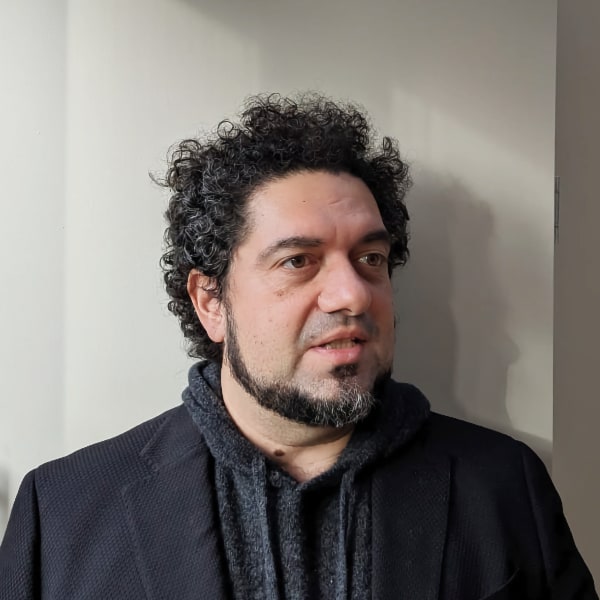
Yevgeny Simkin
Yevgeny Simkin, known as Genia, is the cofounder and chief product officer of Sez Us, a reputation-based social platform built to run without bots and without rewarding outrage. He is also the cofounder and CEO of Samizdat Online, an anti-censorship platform that helps people in autocratic regimes access information that has been blocked or banned. A technologist for over 25 years, he has written for The Bulwark on the ways social media distorts human communication, and his work sits at the intersection of product design, information integrity, and digital freedom.
LISTEN ANYWHERE
In this episode, Siara talks with the co-founder and chief product officer of Sez Us, Yevgeny Simkin. They discuss why outrage travels faster than anything else online, how a reputation system borrowed from real-world manners could change the way people post, and what it would take to run a social network with no bots at all. The conversation widens into decentralization, who actually owns your followers, and the idea of digital sovereignty over your identity, your content, and your money. The stakes come down to ownership. Either your online life keeps living on servers you do not control, or the architecture shifts and some of that power finally comes back to you.
Genia Simkin (00:00)
there's the underlying corporate interest of just getting people to engage. And it's not a malign interest. It's not a, there's nothing evil about it. They're trying to make money. I have no problem with companies trying to make money.
But the way that you can make money best in this space is to keep everybody outraged and addicted and frustrated and annoyed
And so they're tapping into all of the mechanisms that we evolved in order to survive.
So what we knew we needed to do right out of the gate is to build something resembling the real world's reputation mechanism, which gives you responsibility over how you behave because you know that the community that you interact with is going to react.
Siara Singleton (00:43)
a reputation scoring aspect as well?
Genia Simkin (00:45)
Yeah, so all of this adds up to a reputation. again, just out of the gate, we're just measuring the things you just listed. But in the near future, we will be able to
give people the ability to rate all sorts of things across a very, very bespoke domains. So people will be able to develop a reputation as an astrophysicist or as a nutrition specialist or as a historian, whatever. And specific history, like some people will be a historian in Asian studies and other people will be a historian in Central American history or whatnot. So that way,
Again, it's not there to terrify people into making sure that they are, you know, it's not a tyranny. It's there mostly to just give people that extra second of pause before they press the post button to say, could I have said this in a less bombastic way? Could I have said this in a way that doesn't land in some way that people will be annoyed or frustrated?
and then that is my hope. I'm not, I'm not looking to, I'm not looking to avoid conflict. I'm not looking to avoid disagreement. I just want people to engage with one another with roughly the same level of. Civility and compassion that they do when they're at, at say a party where they don't know many people and they, and they get involved in a disagreement. that's always like, and that's like up until this mechanism was built and I, and now, and now I use it whenever I use social media in the past.
Siara Singleton (02:12)
Right.
Genia Simkin (02:22)
I just had my own, this was my thought, this person's really annoying me and here I'm tempted to write a bunch of expletives and press send. But would I do that if I was standing face to face with them? And the answer is no, of course I would not. So it's really hard to temper your own behavior, even when you're a completely civil and normal person. And this is why I was like, the way it's built now in Twitter, it's completely hopeless because
Siara Singleton (02:39)
Yeah.
Genia Simkin (02:51)
You're never going to get the majority of the population, even people who are very well seasoned citizens, you're never going to get them to take that extra time to do that without building that into the system somehow and forcing them to deal with that repercussion in a real way.
Siara Singleton (03:07)
Right.
Yeah. mean, basically you're de-incentivizing rage bait which is the opposite of what many platforms are doing right now without, hampering discussion and conversation So I think, I think that's really powerful.
Genia Simkin (03:22)
all of this on the map was in 2019, I believe I could double check. I wrote a piece for the Bulwark. It was my first piece for the Bulwark and the headline of that piece, which I didn't write because as you know, when you, you, when you.
Siara Singleton (03:34)
Right.
Genia Simkin (03:35)
your editor always has the headline. The headline was, you're not the asshole that Twitter makes you out to be. That was the headline of the piece. So the only way could have arrived at that article that I wrote was by having had been the asshole and then realizing I don't want to be this way.
Siara Singleton (03:42)
You do.
Yeah.
Genia Simkin (03:57)
And then there was the other side of that coin, which is that originally in my youth, I was an aspiring stand-up comedian and that part of me has never gone away. So tons of what I did on Twitter were attempts at various jokes. And when you attempt comedy, you're going to stumble and especially
if you're gonna attempt interesting comedy, you're gonna stumble into all sorts of things that you don't want to share with your grandparents or it's certainly not for everybody. And I was like, this is a time bomb waiting to happen. And then we saw how it all netted out 10 years later where people who were posting what at the time were totally banal jokes or ideas or thoughts that were completely in line with what was.
totally normal in the moment that they were posting it were then dredged up 15 years later when the Overton window on what is appropriate had moved. And now they were being held to modern standards because of things they'd said 10 or 15 years ago. That happens all the time. And I thought that we need to find a way to have the community.
weigh in and say no this isn't this is a nothing burger right like no no no you you don't need to get upset or excited or annoyed about this like this is perfectly fine this person said this it was a totally off the cuff innocent and irrelevant comment and there's no reason to dredge it up again like and there is no tool for that in twitter right like there's only a tool for getting everybody excited and upset that that's the whole that's the whole premise so sorry there's an ambulance going by i don't know if that's captured on the can on the
Siara Singleton (05:35)
It's so
clear that I thought it was on my end. Yeah, no worries.
Genia Simkin (05:41)
I'll just pause and wait till it passes.
almost gone. All right. Yes. So yes, that is very much a reality. And I that was one of the reasons why I was so delighted that we, you know, I wasn't even dreaming of having the opportunity to build a social media platform up until Joe had proposed it, because the realities of both raising the funds necessary to build it and then having some some
Siara Singleton (05:44)
You
Genia Simkin (06:10)
real shot at launching it into a very, very oversaturated environment where there are these dominant figures, which they really can't competed with. So in essence, we're not trying to compete with them. We're trying to of stake our claim on the map and the way that we're doing it. And I'm sure we'll get into this with the way that we're partnering with the DSNP and
Project Liberty makes it possible that even if this particular enterprise doesn't undermine Twitter or doesn't undermine Blue Sky, we're not out to do that. We're out to be a shining city on the hill and hopefully people will use it. But even more hopefully other products will start to recognize that this is
a better way to approach this and start to adopt the things that we are doing as well.
Siara Singleton (07:11)
Yeah, yeah. And I do, I definitely want to get into the DSNP protocol and try to conceptualize how this technology works that Sez Us actually operates on. Because I think a lot of people are sort of more familiar right now with the blue skies of the world. But before we get into that, I wanted to ask if there was a moment on the platform, a reply or maybe an exchange that felt like a breakthrough for what Sez Us was trying to do.
that you could remember.
Genia Simkin (07:41)
Yeah, so there were two in particular. One was very, very early days. It was just after the election. Now, Joe Trippi is he comes from the world of of capital D Democrats. So everyone who he has pitched this to and who's come to the platform so far, it's they're essentially all fairly far.
not far left, but of the capital D Democrat world. So they're progressives and liberals of various stripes. so there was going to be, and there continues to be some amount of fairly overt anti-Trump sentiment from the majority of the people there. And I really, really hope that changes soon. I mean, the people that are saying what they're saying, they're welcome to keep saying it. But I really hope that we get some contingent of the people who are, yeah, exactly, across
Siara Singleton (08:32)
expectation. Of course.
Genia Simkin (08:35)
across the
political divide across the whatever various divides i want i want people to come and talk to each other and discover that they actually don't hate each other at all of the that is a unfortunate myth that we're being saddled with that that we all despise one another but anyway in the in the first few days
It was just after the election and somebody turned up and started essentially shouting about how the election had been stolen. Essentially a mirror image of what had happened in the previous election. And that person was like their reputation plummeted in no time at all, which again, like from the people who are technically from that same side, they voted it as misleading and irrelevant.
Siara Singleton (09:21)
huh.
Genia Simkin (09:22)
and trolling, like those were the, because the other end of, of insight, the other end of influential is a troll, right? So, so they, they marked this person as a misleading troll and that was it. And, and, and that person is still, their account is still there. And I'm actually following them just to see what else they're going to say. And they haven't said anything because they didn't get the response they were hoping for. And, and they just, you know, went off into their corner and they're done. Yeah.
Siara Singleton (09:49)
That's perfect.
Genia Simkin (09:51)
So it worked exactly as designed, right? And it worked in, again, what was really heartening was that technically this was this person's own side that was telling them, no, no, we don't need this. Thanks very much. Yes, we don't like Trump. No, he didn't steal the election. Thank you very much. Goodbye.
Siara Singleton (10:09)
Yeah, and I mean, speaking of like moderation and maybe misinformation, is there any sort of guardrails around moderating or fact checking what users post? Is it more of almost a community led effort? In that case, it was sort of an obvious sense of we all know the situation here. This isn't legitimate, but for more nuanced.
items that are not so obvious, wonder what you're thinking around that.
Genia Simkin (10:37)
Our thinking is that in general, the...
There has to be moderation in moderation. So the kind of moderation we're talking about is specifically around things that are explicitly and overtly illegal. the thing is, and this becomes complicated because the illegality of utterances varies from place to place, but we're focused on the U.S. right now. like this is our core idea is things that you can say out loud in public and not be arrested for saying or doing.
Siara Singleton (10:44)
Yeah.
Genia Simkin (11:10)
like the police are not going to get involved and so we're not going to get involved either and we'll let the community sort it out that there are obviously the same mechanisms that
exist elsewhere for blocking people. also have within our policies, we have the notion that if we detect that people are coordinating attacks on individuals to try to augment their scores, either positive or negative, it doesn't matter. That is strictly against the the our
policies and so we would be kicking people off for doing that. We don't allow bots, we don't allow, again, we're really careful to make sure that it's actual people and to the extent to which people want to verify themselves, we're going to be offering all sorts of ways that people can prove that yes, I am, they don't have to tell the world who they are, but they have to prove to us that they are someone and that they actually exist wherever it is they claim they exist. So within the context of that kind of moderation, yes, we're keen to
Siara Singleton (12:03)
Bye.
Genia Simkin (12:10)
essentially have guardrails against how far you can push the gas pedal or how wildly you can turn the steering wheel. But in terms of just overall expression, we are not going to be telling people that, you've ventured into something that is abusive or racist or whatever. There's all sorts of ways that people can be terrible, and we're going to let them be terrible. And my hope is that the community will then relegate them to the terrible fringes where
they can be terrible at the fringes where they belong right where they are again in the real world I have run into when you I don't know if where you spend most of your time but I used to live in New York City most of my life and you would walk down the street and frequently you would encounter truly terrible people saying and doing truly terrible things and you would avoid them
But most of the time they weren't being arrested by the police because they weren't actually doing anything illegal. They were doing something that was unpleasant to witness. And so you would try to avoid witnessing it and certainly avoid engaging with them depending on how insane they were, you know, and how loud they were and how far, how many blocks they followed you. Shouting at you, you know, that was somewhat problematic. Not to say we're trying to recreate that, but we are trying to recreate the dynamism of the real world.
Siara Singleton (13:15)
I'm
Yeah.
Genia Simkin (13:31)
where you don't have some overlords following you around and telling you that now you've said something that is to this or to that. mean, it's just, because there's no end to that and there's no way you can tease out at the end of the day, you're gonna wind up making more mistakes than not when you have some very specific community who you employ to sit there and decide what is or isn't appropriate for discussion. that just doesn't work.
Siara Singleton (13:59)
Okay, and you mentioned that it's a bot-free environment. Is there something that you're doing different from the major platforms to ensure that it's a bot-free environment?
Genia Simkin (14:11)
Yeah, so, and that's both a-
a now thing and a future thing. So right now we're doing the most cursory thing we can do, which is just all we could afford at the moment, which is we require that people verify that they are who they are with their cell phone. Right. So, so the only way you can be on the platform is to have a cell phone number that can receive a text message with a code. And then you enter that code. And so we know you have a cell phone. It's actually surprisingly difficult to get text messages to non-real cell phones. costs a lot of money and it's
So there are people who still manage it, but it really, really curtails the lowest rung of the bot farm bad faith actors. Because if you just do email, it's super easy to set up a billion emails and just arm everyone with an email and off they go. So that's the first thing we're doing. And then in the near term, we're going to be working with a variety of different partners that help us suss out technologically
to just there's ways you can notice when somebody is behaving as a bot or being bot-like or coming from a predictably bot source or whatever it is. There's a bunch of ways that bots can be weeded out and we make no apologies about that. There are no bots. The only kinds of bots that we will eventually allow are and they're not there now but we will allow like weather bots and you know.
Siara Singleton (15:15)
Yeah.
We're good.
Genia Simkin (15:37)
things that
might tell you know you can plug it in and it'll help you figure out what time your flight is or whatever but but that that's it just utility bots there's not gonna ever be any conversation bots on our platform
Siara Singleton (15:48)
Okay, so DSNP protocol, the DSNP protocol. For people who don't speak blockchain, what is it? Why does it matter for the future of social media? And we'll start there. And then I have a million questions after that.
Genia Simkin (16:07)
Sure.
Okay, so you've uttered the magic secret terrible, the B word and the only word that is more fraught in today's age than the V word is the C word, which is the natural partner of blockchain, which is crypto.
Siara Singleton (16:12)
I know, I said it the B word I know.
Genia Simkin (16:27)
So before we get into all of that, the key to understand is that these are technologies and technologies always need to...
serve some purpose. When you start with the technology as the purpose itself, you've already made a giant mistake, right? So the fact that there is a blockchain underneath the DSNP is, I think, a very good thing. We didn't decide on this. We didn't design or develop the DSNP. We're really happy to be working with them.
But the key thing to understand about what is the purpose of the whole thing, what is the mission of Project Liberty and the DSNP.
The mission is to end what Cory Doctorow coins as an shitification. And for your listeners who don't know that term, what Cory is talking about is the notion that, and he's talking about himself, he started and built some real presence on Twitter. He has a ton of people who follow him there. This is to him, this is a community. And this community is held hostage
Siara Singleton (17:13)
Okay.
Genia Simkin (17:35)
by it at this moment Elon on musk uh... but it doesn't matter Elon is that Elon it i would and i'm not gonna spend a lot of time uh... bashing Elon this point that the more than a people who will do that for me uh... but twitter was all of these bad things before he came along uh... so so the fact that the community on twitter and on facebook and on youtube and everywhere else is a closed system which is owned by some corporate entity
never mind anything malicious, they could simply go out of business and take your entire community and everything you've built there with them because there's no way for you to extract it and move it somewhere else. So that problem where a person takes the time and the energy and the effort to build a community and then start to monetize it in some way or even if they're not, if they're just using it just as a mechanism to communicate with their audience, but they have a sizable audience.
The fact that that entire relationship is being owned by some enterprise and it cannot be migrated somewhere is a ferocious problem. So Corey principally complains about the fact that his community cannot be migrated somewhere. But if you take that one step further, so we need, so we're like, okay, well, let's fix that first. Let's make sure that the community you build on Sez.us us.
Siara Singleton (18:41)
Mm-hmm.
Genia Simkin (18:56)
isn't our community for us to own, it is your community and what could be the technological solution for making sure that when we go out of business, right, or when we're bought by Elon or whatever happens, your community isn't held hostage by that reality. Okay, so that's one question. And the second follow-up question is, wait a minute, why do we wanna move communities from here to there? That's not how it works in the real world. In the real world, you have your friends and they're your friends.
Right? It doesn't matter if you move to Berlin or if you're walking around a mall or if you, you know, or if you take a vacation or you or you and your friends are your friends and, and your colleagues are your colleagues and all of these relationships, they simply exist. They exist outside the, they're not owned in any way by anybody. When, when you're at Starbucks and you run into your friend,
And then you say hi, and then you walk out of the Starbucks and you walk across the street. And now you run into the same person again over at, you know, TJ Maxx. You're not like, who are you? Right? Like you still know them. They're still your friend. And so we're like, yeah, so that's what we need to recreate. Right. Let's skip the, want to migrate my community from here to there. Let's just go straight to the, community is the community.
And it is in the network and the network is distributed and not owned by anybody and nobody could come along and steal it or buy it or, or, or corrupt it. And that's where the blockchain comes in because blockchain is a terrific technology to distribute things and to make them on, you know, essentially uncorruptible and unownable. It's just a public utility where your relationships and your, history to the extent to which you wish to store it is simply.
Siara Singleton (20:18)
it.
Genia Simkin (20:46)
out there somewhere in the cloud. And different enterprises then come along and plug into it, right? So, Sez.Us is plugged into it and then along comes Project J and Project F and Project Z and they all plug into it. And the moment they plug into it, everyone who's on the network is there immediately their customer base in essence, right? And if you were to move away from Sez.Us and go to Product F, there you are.
and they're your friends and there's nothing else. You don't have to fill anything in. You don't have to subscribe. You just log in using the DSNP mechanism for login and voila, you're there. So that's essentially the thing we're solving with the DSNP and we're super happy that they're doing it. Now, they're not the only protocol, right? Like there's the AT protocol that is being developed by Blue Sky and the Fediverse has their community pub, which is a comparable thing.
We're totally happy to use all of them and we don't have a dog in the race. We just really want that reality, the communal distributed network reality to be the reality. So to the extent to which whichever one of these technologies winds up getting the upper hand, hopefully everyone will come along and sign on at some point and that will be the end enshitification problem.
Siara Singleton (22:02)
Mm-hmm.
And for someone who might be a little bit skeptical about the true level of decentralization, what would you say to them? Because, you know, like for instance, with Blue Sky, I think most people who have heard of Blue Sky or maybe even are on Blue Sky are kind of thinking, okay, we've heard about the way that this works. It's an idealistic idea. But are we actually seeing those other examples of other
Genia Simkin (22:11)
Mm-hmm.
Siara Singleton (22:34)
what would you call it? Not protocols. Yeah, okay. So other protocols where I can maybe jump from one place to another, it's a different UI, it's a different algorithm. Is that technology fully built? What is the barrier to access for those who actually want to build on it?
Genia Simkin (22:37)
Well, they're essentially protocols. They are.
Siara Singleton (22:59)
just to kind of help people understand how this is so different from a centralized social media because I think the idea of the social graph and kind of being stuck somewhere is, again, a newer concept for most who are interested in this and I really want people to understand where we are at with this effort.
Genia Simkin (23:15)
Yeah. So I think the most, the most layman way that anyone, anyone can grasp this is if you think of a database and, if the word database is too technological, then think of a spreadsheet, right? Think of a, of a X and Y grid of, of cells where there is information and that information contains data about people and whatever data, doesn't matter what the data is, but let's just start with your name. Right? So, so in that, in that spreadsheet is
millions and millions of people's names. So that spreadsheet has to live somewhere, right? So it could start with living on your computer, but at some point it's probably going to need to be moved out into a computer, a server on the internet that other computers can access. The way that everything works right now is that spreadsheet lives and is owned by some entity and lives on some machine and maybe they have a few copies of it.
But that's not the point. The point is that they are the ones responsible for administering it. They're the only ones who can look at it directly and can write into it or extract from it. They have full control over that information. So when you're talking about distributing information, the first thing that needs to, the kinds of things you're thinking about is, it transparent for everybody? Can anyone go and take a look at what's in that database? Or is it proprietary and belongs to some enterprise?
Siara Singleton (24:34)
you
Genia Simkin (24:37)
Who can edit it? Who can modify it? Who can get a copy of it and do something else with it? These are the kinds of questions and unfortunately, the other protocols that we're talking about, they aren't as...
transparent or as public or as distributed like and then we can get into the weeds of the technology which I'd rather not but the point is that at the moment I think the DSNP actually is the the most it it has more of these features than anybody else and also it the people behind it specifically Project Liberty they are it's it's
Siara Singleton (25:09)
you
Genia Simkin (25:16)
It's a nonprofit. It's a foundation, right? Their goal isn't to find yet another way to make a ton of money, which again, I'm not criticizing people who want to make money, but when you're building things like highways, which is essentially what this is, this is kind of a public works.
When you're building public works, you really don't want to have at the core of it, the incentive of, I'd like to own as much of this as possible. You want it to be something where I want it to be as good as it can be for the public to utilize. And so when we're talking about distribution, we're talking about transparency, blockchain as a technology, again, without getting into the weeds of why, just happens to be the most promising new technology that is the most amenable.
Siara Singleton (25:43)
Thank
Genia Simkin (26:04)
to non-ownership and yet scrutiny. so you have it, it's a distributed ledger, which lives all sorts of places. You don't really have a lot of control over where it lives. In fact, you have virtually none. It's impossible to make changes in it without all of the copies getting those changes essentially simultaneously. That creates all sorts of technological problems, but it does totally take away the problem of...
this thing is being managed by some singular entity. And that is the critical factor. So when you ask, you know, what happens when, if somebody wants to build within the blue sky ecosystem, unfortunately at this time, and I'm like, suspect that if they, like, I'm not behind closed doors at blue sky, but my guess is that they are realizing that sooner or later they're gonna have to.
Siara Singleton (26:35)
Mm-hmm.
Genia Simkin (26:57)
just do the exact same thing as the DSNP. How they do it technologically is not really important, but they can't own this thing. No matter how benevolent they are, no matter what their intentions are, as long as it's a singular entity that owns it and controls it, they're gonna suffer the same inherent problem, which is that sooner or later they're susceptible to corruption, and everyone knows that. So nobody will fully embrace it until they're no longer susceptible to that corruption.
Siara Singleton (27:24)
So you're saying the blue sky is built on the AT protocol, correct? And that's owned by them, not by any non-profit entity. It is a for-profit entity. And so that's a fundamental difference between the AT protocol and the DSNP protocol.
Genia Simkin (27:39)
I actually, I'm not positive what their corporate structure is. So I don't, I don't want to put my foot in my mouth there, but, there, as far as I can tell, there isn't yet the intention to take, like to, to, to, just hand it off to the world and make it just another open source community based thing, like, like Linux, right? Linux is this completely distributed, completely open, totally.
Siara Singleton (27:43)
Yeah.
Right.
Genia Simkin (28:03)
available and anyone can grab a copy of one x and build their own thing on top of it provided they follow the the various rules associated with with using open source code it's it's not like that really that they're they still have control over and and to be fair so does the DSNP s and p but none of these things are bit fully baked but the DSNP s and p is explicitly and overtly and and intentionally said the like this is why we're using the polka dot blockchain which is a public blockchain
it, we can't have control over it. That's just the nature of the technology. We cannot have control over it. So, they're setting up the rules around how this particular set of blocks is related to each other and what kind of information is going to be fed into it. But once that's there, there's really nothing anyone can do to take control over it. It's just, people can abandon it. That's really the only thing they can do.
Siara Singleton (28:31)
Right.
Thank
Yeah.
And it's super interesting because right now, mean specifically in the US but also in the UK, there are a lot of laws and a lot of regulations being written, being enacted about the internet and the internet feels like it's changing rapidly. I can't tell if that's just, you know, by means of what my algorithm is pushing to me these days, but it does feel quite rapid recently. And so I'm wondering, you know, in these...
situations where it's not owned and you can't really put the onus on a specific owner for what, you know, a specific protocol, I guess you can for a protocol, for, you know, for, yeah, no, for specific protocols doing, is that, how does that work when certain regulations, for example, if you're familiar with the Take It Down Act, which is a pretty, it's a popular conversation right now where if,
a user reports that they want content about them that's non-consensual taken down that a platform does need to take it down. in the world of protocols, how does that actually work? And is there a risk of certain governments saying this is not going to be allowed on an IP in the US?
is this is not something that is able to comply with our rules.
This is pie in the sky question that just came up as you're speaking, but it's definitely a thinker.
Genia Simkin (30:20)
Yeah, that's that's
No,
it's an amazing question and I don't think, I think if you start digging around in this, you will discover just how profound this question is. And the thing is, it's something that again, most people in the West have had the luxury of not really needing to worry about because up until this moment that you're describing, the internet was treated as this very...
unregulated open reality, right? Anyone can spin up a server and put up essentially whatever they want. And, you know, the sky is kind of the limit out here, but the, so what we didn't start with.
probably for just time consideration is that the other thing that I'm working on and actually the thing that brought me and Joe Trippi together originally is a thing called Samas.Online, which is an anti-censorship platform that Michael and I built that I dreamt up right after Putin invaded Ukraine. And the specific goal of that platform is to undermine all of the autocrats.
and their ability to censor information on the open internet and make it a non open internet. So if you happen to go to Russia or to Belarus or to Iran or to China, you will just open up your browser and start browsing, you will discover that the vast majority of things that you take for granted as just being able to type in the URL or click a link and go, they suddenly magically just don't exist there. And what you find are DNS errors that say this thing is not here.
Facebook and Twitter, right? They don't exist in Russia. They're not there. So and we built a way for the Russians and the Iranians and so forth to get around those bands and to get to the things that their governments don't want them to see. And when I launched this,
everyone was like, well, you know, what's going to happen when Canada, which is where I live at the moment, decides to ban this or that? Or what are you going to do about the fact that in Germany, they don't allow people to view materials that deny the Holocaust or whatever? And at the time, was very easy for me to say, look, we're just focused on the dictators. We're focused specifically on autocracies. So long as Germany and Canada aren't autocracies, we're just not worried about it. And we're not going to go and undermine their laws. But we're getting, as you
note, we're further and further into this very problematic space where now Western governments that are, you know, liberal governments are tinkering with, potentially blocking more and more of the internet and doing it in very bespoke and arbitrary ways where one nation might decide, well, this particular thing is off limits and another nation says nah, we're still okay with it, you know. So it creates a massive conundrum both for
the people who operate the technology and for the people who live using that technology. And if you were to ask me to predict how this is all gonna play out, I honestly have no idea. Because I think that most people, especially in the West, are really spoiled on what they can get to. And when you put something so stark in front of somebody, like, well, here are images of you naked.
in that, that, come from a time when you somehow, you know, they, they left your device somehow and now they're posted somewhere, but they're you and you should have a right to. Well, well, that's well, so that's, think that is an easier problem to solve because there you can get into a very specific thing of things that are generated by AI, right? Like you, like whenever you have something that you can really draw an easy circle around and say,
Siara Singleton (33:43)
Or generated. Or just not even real.
Genia Simkin (34:03)
this particular thing fits these boundary boxes and that's illegal. But it doesn't solve the problem of the fact that it's illegal here but not illegal there, right? Wherever, and you wind up with these borders that are somewhat arbitrary, that dictate. anyway, yes, it's a brilliant question and the answer is who the hell knows? It's gonna get very complicated very fast.
Siara Singleton (34:18)
Yeah.
Yes,
yes. I mean, I'm hearing even end-to-end encryption is at risk because of laws like this. So it's certainly a shift. I have heard you say in the past, just explain kind of the concept of digital sovereignty. Can you explain, know, it's so pointed to what we just speaking of, but why that is just so important right now?
Genia Simkin (34:53)
Yeah, so this is the core of what we are striving for, as both ourselves, as us, but also what I'm hoping to really get the industry to wrap its arms around. Because it's actually a very easy sales pitch when you start talking about, now that AI is in the mix, it's a very easy sales pitch to make. The notion is, again, you have all of these
So you have the open internet and you picture what it looked like back in the early 2000s when it was just like this free for all. And then you have these major technological corporations that come in and they start to corral things and they start to, and they're not, again, there's nothing malicious about it, but they're doing things to optimize and to make things easier for people. But in the process of doing that, everything winds up going through them. So the notion of digital sovereignty, the way that we see it,
is have essentially three pillars. You have the pillar of identity, you have the pillar of ownership of content, and you have the pillar of financial transactions. Those three things, if you think about them in very broad strokes, you are essentially at the whims of whichever operators facilitate those things for you the moment you touch the internet today. So when you're talking about your identity, it's...
So you're looking at Facebook, Facebook holds your identity. They decide who you are, they track all things about you, they monetize who you are, they sell you to advertisers, and that's all unfortunate. But even if you put that all aside, it's what we discussed earlier, where they hold the information about you and that's it. So you can't go and move your graph elsewhere because it belongs to Facebook. So there's no sovereignty when your identity is literally being held hostage by some enterprise.
And then there's your content. So now Google Docs does this wonderful thing for you or for free even, right? Like they have a free tier. You can write things and have them and they're yours. Okay. But wait a second, where is this stuff? Right? it's on some Google server. so what happens when they decide to unleash their Gemini to go and scour that information for its training? Well, they're free to do that. And they may say that...
Honestly, I have no idea whether or not they do it, right? They might say they don't do it, but it's up to them whether or not they honor that statement and you have no control over it and your content is just out there, again, for your convenience being held on a Google server. But if Google were to go out of business tomorrow, where's all that stuff, right? So, do you own it? Not exactly. And, you know, people just take it for granted that Google's not gonna go out of business tomorrow and I believe they won't, but...
Siara Singleton (37:31)
Yeah.
Genia Simkin (37:38)
You know, that's a lot of faith that you have. And then there's much, much smaller operators who, again, people just assume that, well, I've uploaded a picture, I've uploaded a whatever, and there's an integrity and a trust there that is not earned, and in fact is a very naive integrity and a trust. that's the second pillar of content. And then the third pillar is financial exchange, where you have, you know, I happen to do a lot of business.
because of the nature of some is that I have to wind up paying engineers all over the world and transferring money across borders is ferociously painful and very, very costly for no reason. There's absolutely nothing intrinsically more expensive about moving bits around that represent some currency from here to, you know, across the country to Quebec or across the ocean to London, but
but there are mechanisms in the mix that charge inordinate amounts of money, which creates, it's just this really ferociously unreasonable rent seeking. And that's just the extreme example, but in general, it's just extremely difficult to engage in commerce on the internet without somebody coming along and taking a bit of it. And we just take it for granted, even though if you and I, if I walk across the street to the grocer and I wanna buy a banana,
and I hand them a few bucks for a few bananas, there's nobody coming along to take some portion of that exchange. I get bananas, they get a few bucks, they get all a few bucks. There's no portion of those few bucks that anybody else is grabbing. But in any other way that we exchange currency, someone else is coming along and taking a service fee of some kind, which is pure nonsense. Anyway, so the idea is because this is built on a blockchain,
Siara Singleton (39:09)
Thank
Mm-hmm.
Genia Simkin (39:28)
there is every possibility to then have a truly distributed, truly non rent seeker, you know, involved reality where the content is yours and there is a digital relationship between you and the content. Your identity is yours. The content belongs to that identity. No one else can claim that they're actually responsible for it because there's that, you know, cryptographic reality between you and your content.
You can say, refuse to allow bots to go and train on this, because it's your right to say that. Then whether or not that's honored by whatever the system is, is a separate issue. But of course, at least then you have grounds for a lawsuit if you've said, I don't want this scoured by the bots and then they came and scoured it anyway. And then finally, there's the financial part of it where there's no reason why you shouldn't be able to exchange. And again, I'm not...
Siara Singleton (40:14)
Yeah.
Genia Simkin (40:22)
I'm not saying that people should, like, I get all the problems with cryptocurrency and how it's been utilized thus far. It's very unfortunate, but there is amazing opportunity to really free people to exchange some amounts of money. obviously this can all be regulated. I'm not saying it needs to be something that is, you know, used to...
by slaves and drugs, although money is used that way. But it just, that's the notion of the sovereignty we're talking about. And that's what we're working towards. Unfortunately, I think we're still quite a ways away from that reality. And I don't wanna give people the misimpression that if they come and join Sez Us you know, tomorrow they will be entirely free of their digital overlords that they're currently living under. But that's our goal.
And so to the extent to which your audience is in line with that goal, I would love for them to come and sign up and work towards that goal with us.
Siara Singleton (41:27)
Yeah, and I think even though it can seem a little grim right now of the way of how the internet is at least being regulated here in the US, there is something to say about the invisible hand and if there is more interest in platforms like this, the market will naturally have to shift towards granting us more digital sovereignty. So the more that we kind of learn and understand about what
the situation is right now and who were any of us to know back in 2009 when we signed up for Twitter. was 11 years old when I signed up for Twitter, but we know things now. And so I do have hope that we can then start to make decisions, digital decisions that give us more freedom. So yes, absolutely. I signed up for Sez Us three days ago. I'm excited to be there. So everyone come find me. Siara Singleton Yeah. Yeah.
Genia Simkin (42:16)
Welcome, welcome, thank you so much. Yeah,
and I don't, like, I don't wanna be, I'm always, I roll my eyes just as much as anybody when I hear things, like, the kinds of things that I just said could easily lead to people saying, you know, like, you know, get out of here, you're smoking something. And the thing is, I don't.
I don't like hyperbole. I'm not saying that everything is terrible. On the contrary, things are wonderful. There's all sorts of fantastic stuff. And as you said, it's all it we're we're in a totally nascent environment, looking at technologies that are just born. They're just like 20 years is nothing in the history of invention. So I'm giving everybody a pass. I'm not like you will not hear me pouring derision over all of these.
these companies, these technologies, I think they're doing a lot of things wrong, but they're doing a lot of things right also. And I'm just noticing where I think they've kind of missed the boat and I'm looking to kind of get a handle on that. hopefully, as you said, hopefully there will be a groundswell of companies and enterprises and individuals.
Siara Singleton (43:16)
Thank
Genia Simkin (43:31)
who will say, yeah, yeah, yeah, let's do it this way, right? Like there's no reason not to do it this way. And then we've seen it before, things can shift in a second. It could look like something is the most entrenched and unmovable enterprise ever. And then it's just gone a second later, right? I mean, MySpace is the best example of that, but AOL is a perfect example of that. mean, the idea that people were gonna be convinced wholesale, I can tell you this, because I lived through it, right? And then in the mid 90s, AOL was...
Siara Singleton (43:47)
Yes.
Genia Simkin (44:00)
the behemoth and the notion that people were just gonna walk around it and go straight to the internet was completely impossible. It was just like, no, no, you're dreaming. And then 30 seconds later, that's exactly what it was. So anything is possible.
Siara Singleton (44:15)
It is true. I want to shift a little bit to you and just how you kind of make your digital decisions with all of the background that you have. You've clearly spent a lot of time thinking about what's broken in digital spaces, so I'm wondering what your personal relationship with social media looks like these days. I know you said that you're off Twitter, but I'm wondering, are you on any other platforms?
does the way that you interact with those platforms look different than the average maybe? And what about other digital decisions that you make? Do you use Google Docs? Do you tend to use something that's more likely to be encrypted? Like, I just want to get into your brain and see what is it like to use the internet as you.
Genia Simkin (45:02)
i do use google docs i store all of my all of the relevant things that i use in the box is still the sort of locally as well not not because i do expect to go to a business because i just don't worry about
I'm also, this is gonna sound like I'm just making stuff up now, but I'm also a musician. And I spend a lot of time listening to music. I would say that everything else I can tell you about how I use social media is not gonna be interesting because it's very, I avoid it generally. I'm not on Facebook. I'm on LinkedIn only because I have to be for professional reasons. If I didn't, I wouldn't be there. And that's not any kind of backhand against LinkedIn. actually, usually when I talk about
Sez.us us and when I talk about the nature of reputation, I bring up LinkedIn as an example of how on LinkedIn, because people have to be themselves and it's their professional selves, the kind of conversation you find on LinkedIn is substantially more tempered, which is one of the reasons I'm confident that what we're building is going to be similarly tempered, because the notion is that there's a reputation there to honor. So my social media use is...
Siara Singleton (45:58)
Bye.
Genia Simkin (46:14)
very cursory to the extent to which if you're thinking of YouTube as social media, I watch a fair amount of YouTube. have specific people I'm a fan of. I don't engage much in the comments section. In fact, I think that YouTube comments are a particular mess. And I'm very confused as to why with all the resources that Google has, they haven't normalized the way that like there's little things they could do. Never mind, you know, the kind of overhaul we're talking about, but just little things they could do that make the quality of
life in the YouTube comments substantially more nice.
Don't use those. For communication, I do prefer end-to-end encrypted things. I use Signal primarily. I use WhatsApp. I've heard rumblings about how there's something that they're doing that isn't truly end-to-end encrypted. I don't have any insight into that for the time being until I hear something concrete. I trust that my communication on WhatsApp is end-to-end encrypted. And because I'm so involved in the notion of what autocrats and autocratic governments
do online and the way that they are engaged in all of their malign behaviors, I am very cautious about the kinds of things I utter in the open on the internet because you really don't know who's listening. And for most people, that really doesn't matter. For me, it does a little bit. For others, might a great deal. So for example, the big kerfuffle with Pete Hexeth and crew on Signal, like to me, that's
Siara Singleton (47:38)
Thank you.
Genia Simkin (47:48)
I mean, the media didn't make any less of a story of it than it needed to be. They really took them to task for it. But I think the average consumer doesn't understand to what extent nefarious international actors are really doing everything they can to have their ear to the ground and know what these people are talking about, specifically those people, right? Like those are the people that need to be the most careful.
Siara Singleton (48:07)
Right, those are the people. Yeah.
Genia Simkin (48:12)
So that, want people, like if I'm gonna be taken as an expert of any kind, my expertise is simply to say.
Yeah, you should be mindful of what you do online because it really is, it's gonna be out there and you never know whose database is gonna be cracked by whom and when and things that you are confident are being held in confidence are in fact going to be released, maybe even held hostage as something that will be released. I mean, that happens, that actually happens if you read about those kinds of stories, it happens all the time. So music, the most interesting thing that I could say is I was for a while,
Siara Singleton (48:40)
Yeah.
Genia Simkin (48:48)
both Amazon and Google offered a service where you upload your own music. I have many, many, many gigabytes of my own music that I owned from when there was no such thing as streaming. I am a huge critic of Spotify and the way that they operate. I basically uploaded all my music to wherever, I mean, this was before Spotify, but now I'm a critic of Spotify. I uploaded all my music to
Siara Singleton (49:10)
I'm good.
Genia Simkin (49:19)
Google Music, which was a service they offered, and then they took it hostage. they disabled the service. They said, you can't upload music to us anymore. And the music that's here, you can still have it, but you can't download it again. So this is, again, this is a perfect example of somebody who as...
Siara Singleton (49:34)
Yeah.
Genia Simkin (49:39)
you know, reliable quote unquote as Google doing something that I genuinely did not expect and then left me in the lurch where I had, again, I think it was, I think I had close to a terabyte of my own music that I uploaded. I mean, I say my own music, I my record collection, right? Things that I had, I had originally had many thousands of CDs and then in the nineties I took the time to burn all those CDs and make MP3s out of them and here's my collection and I uploaded it to Google.
Siara Singleton (49:58)
you.
That's hard work.
Genia Simkin (50:08)
It was was months. was a month of work. Yeah, months of work.
Siara Singleton (50:09)
That's honest work. I've done it.
Genia Simkin (50:13)
And then they were like, oh, never mind, we don't do this anymore. And I was like, OK, well, can I have my music back? And they were like, no, we don't offer that service either. So so this is gone. Right. And that's a kind of social media. And and I so I'm I feel burned and.
Siara Singleton (50:21)
Wow.
Yeah,
I would.
Genia Simkin (50:32)
And I don't, so I'm, in this respect, I'm kind of a Luddite because I consume a lot of information and I pay for the information that I consume. Sometimes it's on Substack, right? So that's a kind of social media, but other times it's, you know, the New York Times. That's, you know, I mean, and then I comment in the New York Times from time to time, you know? And so is that social media? I guess, you know, it's all a form of it. Yeah.
Siara Singleton (50:59)
It is. Anyway, yeah.
So you're a local storage person. When you can be.
Genia Simkin (51:06)
When I can, yeah, I mean when I can be, but that's not a realistic thing to say. I'm waiting for something that I'm gonna wind up having to build myself to come along kind of person.
Siara Singleton (51:17)
Yeah, I see. Yeah,
yeah, the promise of the cloud is very interesting when we all started having too many photos in our gallery to actually keep locally on our phone and it seemed great to spend 99 cents a month. But what does that mean now? Something to think about. OK, so I asked every guest this and I definitely want to hear your thoughts on this. What are you logging out of this year and what are you logging into? However you might interpret it.
Often people will share maybe a digital habit or a concept that they're leaning into and then one that they want to leave behind.
Genia Simkin (51:53)
This is probably one of the questions that you've sent me and I should have looked at it I didn't look at it and now I have to think about it in real time.
Siara Singleton (51:57)
Well, it's perfect to just what first thing that
comes to mind that this is the question for that.
Genia Simkin (52:03)
Yeah. Huh. What am I logging out of? And what am I logging into?
Siara Singleton (52:10)
I love how
all these technical questions that most people can't answer, you're like that. And this one, this is the stumper.
Genia Simkin (52:18)
One thing,
my wife, she hears us from across the house and she really wants to chime in. What are we logging out of? What are we logging into? As Canadians, we've just logged into and started paying for CBC Gem and we continue to pay for Crave and we're contemplating losing some of the more American services, especially we've already canceled Amazon Prime and...
Siara Singleton (52:36)
Mmm.
Genia Simkin (52:39)
That's more of a go Canada thing. my wife is actually Canadian. American too, but she's principally Canadian. I am a resident of Canada, but there's a lot of this very patriotic pro-Canadian and specifically anti-Trump, right? Like no one's anti-America, but the way that the Trump administration is positioning itself in this very hostile and weirdly antagonistic way against Canada, it's driving everybody.
Siara Singleton (52:46)
Okay.
Right.
Genia Simkin (53:05)
Yeah, so we're logging out of American products. Every time I go to the supermarket, I'm now looking to see what is made in America and we're not buying those and we're only buying products not made in America, which in Canada means we don't get to eat oranges, but because they don't really come from anywhere else. Or spinach, yeah. And then logging in. So this is going to be a total nerd.
Siara Singleton (53:23)
my gosh, wow, that's so, that's fascinating.
Genia Simkin (53:34)
thing, but I'm, I'm logging into Flutter myself. Like that's technology, which is the cross-platform technology that you build applications with. and that's actually the platform that we've built Sez.us us in. and I've had my engineers building in it for several years now, but I hadn't taken it up myself. And so, I'm finally actually going in and, and, and, and learning it and, picking it up. I'm fine. I have finding it very, very fun. So if, if, if any of your listeners are, are programmer tech nerds who want something fun to do that, that.
Siara Singleton (53:59)
Really.
Genia Simkin (54:03)
doing I'd say pick up Dart and Flutter and go.
Siara Singleton (54:06)
Awesome. Is it flutter a language?
Genia Simkin (54:09)
Flutter, it's
an SDK. The language is Dart. it's a product that cross-compiles into both iOS native and Android native code. Not code, the actual runtime. So you wind up with an application that runs on both. And I actually haven't dug into it. But apparently, it actually can cross-compile into things that are native for both Mac and Windows. And so basically, you're writing the code once.
Siara Singleton (54:22)
Thank
Genia Simkin (54:37)
and you're getting a product that can run essentially everywhere.
Siara Singleton (54:39)
Okay,
nice. I'm gonna have to look into that. Very cool. Okay, where can we learn about Sez.us us and any other projects we're working on and you?
Genia Simkin (54:50)
Sez.us is downloadable in the iOS and Android stores and in your browser. so far, we've only had a tiny bit of media. We had Wired cover us, and it's a wonderful piece. But if you Google Wired and Sez.us, you will find that piece and learn all about it. There's some amount about me there as well. And please come and join Samizdatonline.com, which I'm going to have to spell.
SAMIZDAT online.org is a nonprofit which anti-censorship platform which distributes information to places like Russia and Belarus and Iran for the citizens there to actually be able to read what their leaders are getting them into and we will take all the donations that you can afford to muster our way and be grateful for them.
Siara Singleton (55:19)
Yes, please.
Genia Simkin (55:46)
There's a Wired piece about that too. Yeah, Wired, well there's many actually. That's been around for three years and we were covered in Fast Company and Business Insider and a bunch of other places. So we've gotten some very good coverage, very complimentary coverage, but very little funding. So that's always something that would be very helpful. And me, I mean, I'm not really anywhere.
Siara Singleton (55:49)
I'm tired.
Genia Simkin (56:14)
post the occasional joke on Sez.us us and wax philosophical here and there on the at the Bulwark but i haven't actually written a piece for the Bulwark in since like last thanksgiving because i've just been a little bit busy so warm but i'm i'm Google-able and always always up to something interesting or try to be in
Siara Singleton (56:26)
Of course, that's okay.
Well thank you so much for joining us. This has been an absolute pleasure.
Genia Simkin (56:38)
Sierra, thank you so much. This has been really great. I hope that at some point in the not too distant future, I will have some really exciting and interesting things to share and we could do this again.
Siara Singleton (56:49)
Yes, please. We would love that. Thank you.
Genia Simkin (56:51)
All right,
well, thank you.
Claim 1: Cory Doctorow coined "enshittification" to describe platform decay. — TRUE Doctorow coined and popularized the term in a 2022 blog post; it was the American Dialect Society's 2023 word of the year. Source: https://en.wikipedia.org/wiki/Enshittification
Claim 2: DSNP is built on the Polkadot public blockchain and is governed by a nonprofit, Project Liberty. — TRUE
DSNP's first production implementation, Frequency, runs in the Polkadot ecosystem, and the protocol is developed and governed through the nonprofit Project Liberty.
Source: https://dsnp.org/ and https://www.coindesk.com/tech/2022/06/29/meet-frequency-polkadots-new-decentralized-social-media-parachain
Claim 3: Bluesky is built on the AT Protocol. — TRUE
Bluesky runs on the AT Protocol. Source: General public record; guest appropriately hedged the ownership detail.
Claim 4: The Take It Down Act requires a platform to remove non-consensual content about a person when they report it. — TRUE
Signed into law May 19, 2025, it requires covered platforms to remove non-consensual intimate imagery, including AI deepfakes, within 48 hours of a valid request.
Source: https://www.congress.gov/bill/119th-congress/senate-bill/146/text
Claim 5: Google (Google Music / Google Play Music) shut down its music-upload service and would not let him download his uploaded library back. — PARTIALLY TRUE Google did shut Google Play Music down at the end of 2020. During the shutdown, Google provided a transfer tool to YouTube Music and a Google Takeout option to download uploads and purchases before access ended.
Source: https://blog.youtube/news-and-events/youtube-music-will-replace-google-play-music-end-2020/

Subscribe to Log Out
wherever you listen.


